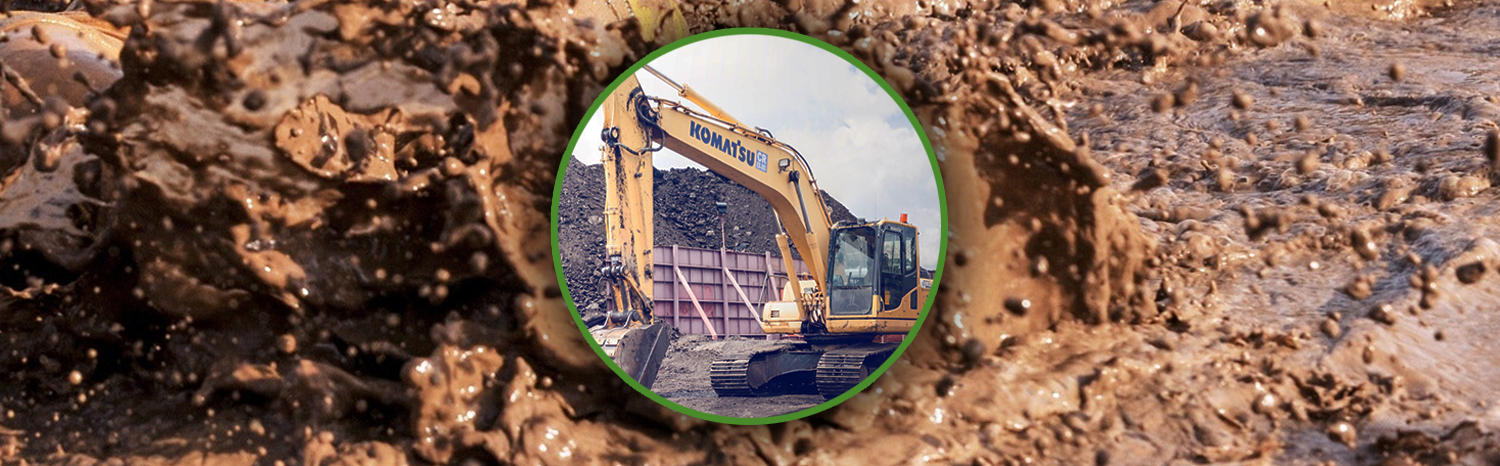
10 Reasons To Choose Global Environmental Solutions for your Soil Stabilizing Project

1. Our products are environmentally safe – developed for the earth, with the earth in mind.


2. We’ve been working within the soil stabilization industry for 20 years now (originally started as DirtGlue Enterprises – which is still the forefront namesake of our line of terrain management products).


3. We listen. GES is not going to provide you with a cookie-cutter, out-of-the-box solution. We’re going to hear what your issue at hand is.


4. We believe in science (and use it as a tool). Following the “listening” portion above, we take the education you’ve granted us from your pain and customize the right product driven by scientific research and modernized technology utilization. The idea is to come up with an application that solves any variable that might exist and pose a challenge to the fruitful culmination and inherent solution of your project.


5. We like to play in the dirt. With experience, comes experience. And with that experience and understanding, we can make better informed decisions on how to manage the “dirt” we’re working with…


6. Consider our DirtGlue® line of products if you have a need in any of these areas:

  • Permanent dust control
  • Embankment stabilization
  • Sub-grade stabilization
  • “Green” paving using industrial polymer as a bonding agent
  • All soil stabilizing requirements
  • Erosion control
  • Stockpile capping
  • And really any terrain management/control
  • solution you may be on the hunt for…


7. We have sales and service locations worldwide, so, we’re global, and readily available for you whenever, and wherever you need it!


8. We are a veteran owned business.


9. Our goal and operative mission has been – since day one – to provide the best possible results in an industry where ‘good’ just isn’t good enough. We strive for technical and ecological superiority; every product, every project, all the time.


10. We solve problems related to soil management – and we enjoy it.

Searching for proven environmental solutions? See how GES tackles dust, erosion, and soil stabilization challenges with innovative, eco-friendly products used worldwide.

As Winter Sets in, Put DGCool™ to Work for Your Cold Weather Soil Management Application

Here in the Northeast (and elsewhere as well), autumn is quickly giving way to much cooler temperature. Summer has long left us, and, as we prepare for the winter months ahead, plans to manage and best serve the earth around us are still being brainstormed. Taking control of the soil and terrain on our properties isn’t particular easy as it begins to stiffen with temperatures getting colder and colder by the day. And, solutions served up in the spring and summer months aren’t going to work quite as well with a colder environment at play.

If you didn’t hear, we introduced one of our latest product’s DGCool™, last winter, and the reviews have been quite positive (read about one such application here). Just because the temperatures plummet, doesn’t mean we can retire for the winter and hibernate until spring…

It’s time to get familiar with DGCool™. Now through the end of the year, when you place your order for DGCool™ to solve your soil management problem, we’ll take 15% off of your cost!

So what is DGCool™?

DGCool™ polymer emulsion is a powerful, one-of-a-kind, high-tech bonding agent specifically engineered to bond soil particles together and stand up to cold temperatures. DGCool™ penetrates the surface, binding with the soil to form a tough but flexible layer of protection. Applications can be made at temperatures down to 32°F / 0°C. Combining superior film strength and adhesive properties, DGCool™ is the ideal solution for stockpile capping, stabilizing slopes and embankments in colder environments. DGCool® leaves a flexible crust on the surface of the soil that allows the crust to give if the soil settles and reduces the risk of crust cracking either from settling, or from very cold temperatures relative to most other polymer soil stabilization products.

If you’re faced with any of these application challenges, DGCool™ might very well be the best solution to solve your problem:

  • Surface / spray on application
  • Erosion control
  • Stockpile capping / stockpile sealing
  • SWPP management plans embankment stabilization contaminated soil containment
  • Eliminating TSS in storm water run-off dust control on non-driving surfaces
  • Replacing conventional tackifier in hydroseeding applications polymer.

We will also be offering a 15% discount on orders placed now through the end of this year. 

The benefits of  DGCool™ include:

  • Dust control management
  • Erosion control
  • Stockpile capping and sealing
  • Sediment control
  • Much stronger and longer lasting than conventional tackifier in hydroseeding applications
  • Environmentally friendly
  • Can be applied in temperatures as cold as 32°F / 0°C

And further, as is standard in all of our DirtGlue® polymers, there exists no harmful chemicals and it will not adversely affect people, animals or aquatic life. We create our products with the earth, with the earth in mind!

And, again, as a reminder, through the end of this calendar year, we will be offering a 15% discount on all DGCool™ orders placed. 

So, if you think DGCool™ might be the solution for you, let’s talk. There’s no better time than now to put it to work for you!

Typical industries served:

  • Parks & Recreation
  • Road Building
  • Do It Yourself
  • Energy
  • Mining
  • Military
  • Construction
  • Landscaping

Need reliable soil stabilization through winter? Discover why DGCool® is designed for cold-weather applications that keep your project on track. 

Property Improvement with DirtGlue® at the Core

A collage features a central logo reading "GES Global Environmental Solutions," surrounded by images of desert landscaping with cacti, succulents, stone pathways, and innovative dust control techniques.

As COVID-19 and its inherent “social distancing” measures continue to sweep the nation, some businesses have largely been deemed “essential” at the outset. By and large, business that maintain a safe distance for employees and customers have been “safe” and in the clear; this includes outdoor works such as those employed by and operating landscaping companies. And, at this time of year, landscaping and outdoor terrain/property improvement are at the forefront of many peoples’ minds.

We thought, as an escape, we’d present four quick ways properties can be improved upon, and how DirtGlue® products help shape each one of them. Any landscape company worth their salt knows the ins, outs, and advantages of doing things right, and doing them right the first time. That recipe ought to include DirtGlue®. Right? Right.

  1. Landscaping – Landscaping can take on many different meanings, but for the purpose of this post, we’ll discuss the actual development of a lush lawn, and the healthy vegetation required to achieve a desirable landscaped space that is free of environmental issues such as erosion, improper drainage, and the like. So, we’ll begin with hydroseeding… Hydromulching, at its core, is an essential element to many processes involving the healthy and vast cultivation of expansive vegetation – primarily that of grasses.

    Sometimes referred to as hydroseeding, the hydromulch process is a faster, more economical way to bring get vegetative coverage over large areas quickly and economically and to increase the likelihood of seed germination. This is to the benefit of contractors worldwide, laying down and planting seed from applications from residential lawns to commercial and government projects such as seeding roadsides as a means to help protect against dust, erosion and elemental runoff.

    Benefits of using DirtGlue® polymer as a tackifying solution –

    • Reduces water usage and helps retain available moisture
    • Reduces erosion and the effects of erosion
    • Improved plant growth
    • Binds soil, seed and mulch mediums
    • Prevents washouts even in the severest weather
  2. Patio – If you’re considering hardscape, let’s talk about what you’re doing (and using) for infill materials when you’re installing pavers or repairing an existing the patio.

    Consider our DirtGlueDry® powdered polymer solution if you appreciate the notion of “working smarter, not harder” when it comes to this application. When mixed with appropriate sand or a sand / stone dust blend and then wetted, DirtGlueDry® powdered polymer cures to form a hardened infill material that is resistant to insect and weed infestation. The product is also proven to tolerate pressure washers and leaf blowers allowing periodic cleaning of the patio without necessitating new infill be put back in after cleaning. Its strength is unrivaled by other solution sets on the market. This option is much lower in cost than purchasing polymerized sand. It also allows you or your installer to customize the strength by adding more or less DirtGlueDry® powdered polymer to the infill material of choice (sand or stone dust sourced locally to reduce cost significantly).

    Once you’ve got the infill set, it’s time to focus on the piece of the patio that you actually see, which of course, is the surface…

    Engineers, construction contractors, builders, and you, the common DIY homeowner deal with the destructive chemical reactions cement-based building materials suffer due mainly to the exposure to water, which acts as a reaction medium or solvent in this destruction. You work tirelessly to make repairs, and patch compromised spots within the infrastructure of your patio. Why not consider a solution that, quite simply, lasts?

    Film formers/barrier type technologies (coatings) have been widely used, but due to weathering and ultraviolet exposure these coatings have limited lifespan and thus periodic reparative applications are required. This issue has been revolutionarily remediated with the all-inclusive protective properties of MasonProof™, which is a permanent waterproofing product that does not change the color or texture of the treated surface.

  3. Drainage / Erosion – Soil erosion and embankment control is a problem that many contractors face when trying to shore a landscape that is subject to runoff from a storm, general rain, or seasonal change. It’s a natural process, which occurs due to detachment and movement of topsoil by the action of wind and flowing water. In many cases, the lack of vegetation cover on existing slopes is often responsible for the formation of rills and rain cuts eventually leading to sliding of slopes.

    These soil and embankment erosion control challenges are either met at the outset / design phase of a new construction project, or they’re tackled as the issue pops up organically whether at a property, or on the side of the road where embankments are in no short supply.

    Products such as our tried and true DirtGlue® polymer will penetrate the surface by binding with the soil to form a tough, durable, three-dimensional matrix layer of protection. Combining superior film strength and adhesive properties, DirtGlue® polymer is the ideal solution for dust control in non-traffic areas, stockpile capping and stabilizing slopes and embankments. When hydroseeding, substituting DirtGlue® polymer in place of a traditional, old style tackifier increases germination rate, decreases germination time, and eliminates washouts, rilling and, erosion. Using DirtGlue® polymer as the tackifier, it will hold even in the toughest conditions, protecting against heavy rain and wind.

  4. Pathways and Pavement – There’s two distinct modes of thinking/delivery here. Pathways, as they are, can mean myriad things. They can be straight native terrain that you’re looking to augment for safer, easier travel. They can be built with some sort of prick, or paver, in which case, we invite you to reference the “patio” portion of this post as it falls pretty directly in line with a pathway built of similar material. And finally, we arrive at pavement, which can be laid for a pathway, or as a larger scale project, be it the drive, parking area, and all of the above.

    In order to provide a pavement having good functionality and good lifespan we need first to ensure good base and good drainage, thus we do NOT rely on the pavement for strength but rather for “consolidation of the surface aggregate” such that there is no mud in the wet season and no dust in the dry season.

    Things to consider prior to a pavement dump include what it is your pouring the pavement on. Seriously, what’s in the terrain? Where is the terrain? What are the challenges associated with the surrounding ecosystem? What’s the drainage situation in the event of any environmental runoff? What’s under the terrain you’re pouring on?

    At Global Environmental Solutions, we take to the art of road building seriously. And, we’re serious when we use the word “art.” Because it is. It’s not as easy as what we’ve already mentioned above. You can’t just dump a load of pavement and flatten it out with a roller. There’s a science and craft element to the entire initiation. And, there exists another important question… What’s in the aggregate that makes up your pavement? Do you even know?

    Appropriate steps for DGE Polymer Pavement System are as follows:

  • Ensure good drainage.
  • Ensure a well stabilized base.
  • Ensure proper aggregate with correct particle size distribution including 20% – 25% fines (material passing #150 sieve).
  • Loosen the aggregate in the area to be treated.
  • DirtGlue® polymer will be applied at a rate of not less than 0.03 gallons per sq. ft. per inch of pavement thickness as calculated before diluting with water. After making calculations dilute the DirtGlue® polymer with approximately one part water (a slight amount more water may be added later if you determine that the aggregate is too dry).
  • Add the appropriate amount of TerraDry® (if required because of soil/ aggregate type).
  • Apply the blended liquid (polymer and water) to the aggregate and mechanically mix in thoroughly and evenly. Depending upon type of equipment used this could take two or possibly three applications to get all of the liquid into the soil/aggregate. Keep mixing thoroughly and evenly 2 – 3 inches deep!
  • Once the aggregate is treated with full amount of the product(s) specified and the product(s) are mixed in completely then level and compact.
  • Proper curing requires warm temperatures. Do not apply when temps are below 55 or when rain is imminent. Typically, the warmer the better to ensure fast curing.

Searching for proven environmental solutions? See how GES tackles dust, erosion, and soil stabilization challenges with innovative, eco-friendly products used worldwide.

Observations from the Worksite: The Rise of DGCool™, the Industry’s First Cold Climate Polymer Solution

A large dump truck is moving through a quarry, carrying a load of dark materials. The scene is expertly managed with dust control measures. In the center of the image, there's a circular logo for "DG Cool" with the tagline "The Only Cold Climate Polymer.

Conversation with D&T Landscaping & Irrigation President Dave Olson

D&T Landscaping & Irrigation have been serving their community in Minnesota since 1980.  That’s 40 years of service with a continued value proposition to improve and foster top tiered solutions for all their customers’ unique needs.

One such customer/vertical they’ve long served exists in the mining industry. A reoccurring challenge D&T has been faced with is in utilizing a dust suppressant solution that keeps potential environmentally harmful fugitive dust particles onsite rather than floating around in the air. The challenge is further heightened by the fact that the different experiences Minnesota is faced with from naturally occurring seasonal shifts had compromised past remedial attempts. D&T utilized an assortment of polymer based products as a potential solution (as opposed to their typical mode of attack – hay) from several different companies over the years. Finally, three years ago they came in to contact with Global Environmental Solutions who have worked closely with D&T owner/president, Dave Olson, to create an exact solution to their working problem(s). This relationship led to GES developing their latest product offering, DGCool™.

Keep reading to learn more about the challenge, the approach, the solution, and the overall experience with GES and DGCool™:

How’d you learn about Global Environmental Solutions and their DirtGlue® line of products?

Dave Olson: Well, what we do is we provide dust suppression services for the steel and tackamine mines over here in Minnesota. We’ve historically used hay to suppress the dust permeating from the mines. The Challenge with that is these conditions. These tailings basins that we work in are wet. Getting a piece of equipment down there is extremely challenging so we started exploring using polymers as a potential way to hold the dust down until we could get other equipment out there to cover it up.

We tried probably six different products to accomplish this from five different companies and GES or DirtGlue® was the only company that was willing to reformulate their product to best serve our unique conditions. Up to that point we had no products, no polymer based products that were holding the dust down on our tailings basin.

DGCool™ came out of that effort to kind of redesign the product to hold in colder temperatures. When we’re transitioning from fall into winter and then again from winter to spring, we go through a frost / freeze process where the tailings freeze generally at night, warm up, moisture draws out and then we’re kind of okay for the day. But once it starts to freeze, it’s a really fine product, the moisture evaporates and any wind that picks up from below wipes it out. That’s an issue because in these mines, the dust is considered fugitive dust, which is not ideal. Obviously, our goal is to keep that dust in place.

How long have you been working with GES?

Olson: We had tried a bunch of polymers from a number of companies because by-and-large the marketing shtick is everyone claims to have the solution you/we need. When we solicited the help of GES three years ago we started by using two of their products, DirtGlue® and DustLess®. A lot of polymers act similarly, but there are certain elements to each that are proprietary, which is why we tried two different products and the products of other vendors. We wanted to see what would work best for our challenges.

Two years ago we tried a large 100-acre deployment of GES’s DirtGlue® product and it did not withstand the frost / freeze process. It would freeze and peel off and didn’t solve the problem. So I went back to Chris (Rider) and explained what was happening – what we were hoping for – and that’s when he started reformulating the recipe based off of tailings samples we sent at his request. This was the beginning of what would become their DGCool™ solution.

How did GES work with you to outfit you with the best possible solution for your unique challenge? What can you say about the working relationship between all involved?

Olson: What I like about Chris and GES is he’s continually taking a proactive approach and even still asks for tailings samples so the company can work to improve upon what we’ve put to action. They don’t simply rest on what they’ve delivered and move on – they stay actively engaged and strive to maintain advanced improvement.

They were the only company that came back and asked how it went. “How did it go? What were your application rates?” Of all the other companies, they’re the only one that called back. We’re not in this for a one-time sale, we’re looking to solve a problem, so that gets me enthused about the working relationship…

You worked with GES to help facilitate a working test example of the effectiveness of their new DGCool™ product. Tell us about the application. What can you say about the product? How did it help you accomplish what you were looking to achieve?

Olson: It held until we got snow, which is good. Once we get snow there is no dust problem until spring (for obvious reasons). So we’ll know exactly what we’re dealing with when the snow melts and water starts to runoff as it does in spring. If the product is still there, we’ve done it.

We have the product at two sites, a 100-acre site and a 5-acre one. They both held until we got the snow on the ground, which is encouraging. It’s definitely much better than what it was. Prior to this year we tried a different deployment method which was application via helicopter. The first year we used a bucket with large spray nozzles. The helicopter company came up with a different solution – it wasn’t a spray nozzle but more of a rotating spin, gravity feed out, which was a much better solution. So the combination of the product and the delivery method is how we’ve gotten to where we are this year.

Would you recommend GES and their products to people in your industry?

Olson: Yes and no (laughs). Yes because they offer exemplary service and work with the customer to tweak their product to match exactly what the customer needs. This can’t be understated. I jokingly say “no” because in our case I feel like we’re on the cusp of a pretty proprietary solution and application set that separates what we’re doing in the market. But I think as far as what we know as of right now, absolutely I would. GES has been a real pleasure to work with, and the relationship continues to develop as we both look to improve upon what we’ve accomplished thus far, which is exciting for all parties involved.

Between Rose and Chris I can’t say enough good things about the GES team. I’ve felt like from the start they’ve been engaged with me to help me solve a problem. Since the inception we’ve been working closely to help solve the challenge at hand and we’ve collectively kept peeling the onion. For instance, when we started we had a problem with our pump system at the application stage. Come to find out, the polymer heats up to a pretty high temperature and the seals of the deployment pump would fail. I called Chris to ask him what he thought was happening and he was like, ‘if you’re not immediately trying to pump that through the pump prior to it heating up, yeah, it’s going to wreck the seals.’ So we solved the problem by finding a high-temperature chemical seal, which he was engaged with at the outset. I can’t even begin to tell you how many emails he sent me with resources full of information to look into when it came to finding an appropriate seal.

As we’ve gone through evaluating the product, they’ve been there. They want to help us find the perfect solution. I have no doubt that if we come out of spring and the product has deteriorated or is non-existent, Chris is going to be right there and spend more time trying to figure out where we go to move forward and solve it. That’s the kind of guy he is…

###

Need reliable soil stabilization through winter? Discover why DGCool® is designed for cold-weather applications that keep your project on track.

GES: For the Earth, with the Earth in Mind.

What is Track-out?

Antiquated HVAC

Recently, the EPA published a number of statements declaring “track-out” as one of the biggest environmental violations within agriculture, construction, and mining. If you are unfamiliar with this term, you are not alone. In fact, one of the principal reasons the EPA has become increasingly vocal on this subject is to bring awareness to this often-overlooked issue.

In response to the growing trend to bring this issue into the spotlight, we offer this brief article to introduce you to the subject of track-out, explain the impact this can have on the environment when not managed properly, and how GES and its products such as DirtGlue® Industrial polymer have been specifically created to help safeguard industrial worksites from this hazardous and egregious violation.

Let’s begin with defining “track-out.” Simply put, track-out is the mud, soil, or other organic debris that gets carried out of a construction site, farm, or any other industrial area where the soil has been disturbed. As numerous vehicles, such as tractors, trucks, and trailers travel in and out of these areas each day, they track-out debris which then gets deposited outside of the work zones as it flings off of tire treads and mechanical components.

Ok, so what’s the big deal? Here’s the scoop…

As vehicles carry out and deposit this debris, it can find its way into storm drains, rivers, local watersheds, delicate grasslands, animal habitats…the list could go on. This is a particularly sensitive environmental issue when you consider that many industrial sites such as mines, quarries, or large farms are full of chemicals, fertilizers, and other compounds that pose a serious threat when they enter areas that they shouldn’t be in.

Although the EPA currently requires a SWPPP (Storm Water Pollution Protection Plan) to address the issue of stormwater, as it can sweep away pollutants from disturbed soil, the plan only really tackles the issue of track-out by embedding a requirement that each site have an exit pad that vehicles must cross as they leave the area.

Now, we’re not saying that an exit pad is a bad idea. Because when installed, used, and maintained properly, this can be a helpful measure. However, we would like to say that there is another, more advanced solution that goes straight to the root cause of this issue, which is the loose, disturbed soil itself.

Let’s pause for a second to ponder this question: If the loose soil is the root of this issue, then what if we could “un-loosen” the soil? What if the soil was firm and solid enough that it couldn’t be tracked-out?

It was this simple, yet profound realization that led us to developing DirtGlue®, a non-hazardous, high-tech bonding agent specifically engineered to bond soil particles together to form a tough, durable, three-dimensional matrix that functions like asphalt. As an environmentally-friendly product, DirtGlue® Industrial polymer contains no harmful chemicals, and will not adversely affect people, animals or aquatic life.

So let’s say that we’re beginning a new development project, and crews are moving in to begin to clear and grade the site. It goes without saying that this process will produce significant soil disruption. But now, imagine that we built a proper road into this new development area. We tamped and graded the soil perfectly, then applied DirtGlue® Industrial polymer to bond loose dirt making a stable, solid surface. What impact would this have? Well, you may have guessed it…it would significantly reduce track out. Effectively, by the time the construction vehicles reached the exit pad, they would have already had ample time to discharge any loose soil that they picked up in the active construction zone. The exit pad would then only have to take care of the small amounts of remnant left on the tires. As an added bonus, your development site will also look cleaner and more professional. It’s a win-win.

Since its inception, GES has been committed to producing the highest quality soil stabilization products to help buffer the environmental impacts of construction, mining, agriculture, and other forms of industrial enterprise. We take pride in what we do, knowing that when you choose GES, you are making a conscious, informed decision to take part in the growing movement of responsible, forward-thinking environmental management.

We hope that this article helped to raise your awareness of track-out, and provided you with some ease-of-mind knowing that doing your part to manage this environmental risk is as easy as picking up the phone and giving GES a call.