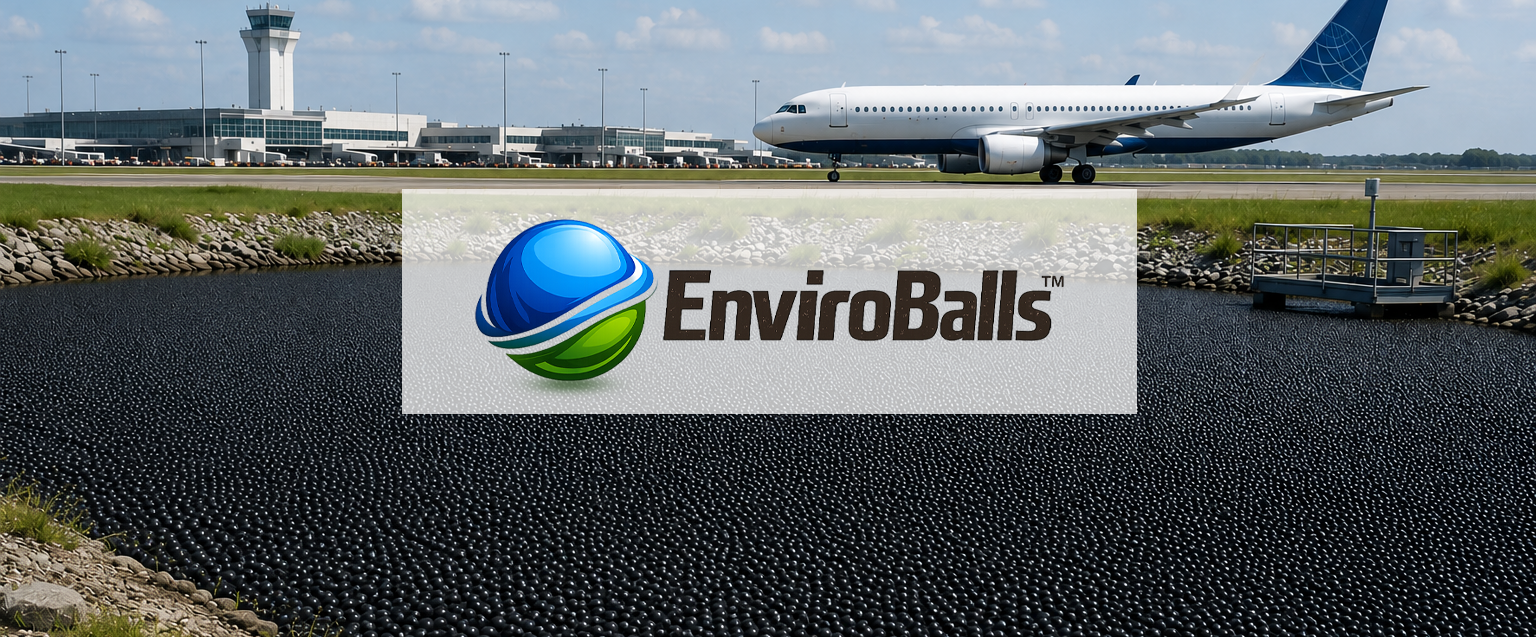
Bird Balls for Reservoir and Water Infrastructure Wildlife Control

bird deterrent

A guide for water utilities, reservoir operators, and environmental engineers managing bird and wildlife activity on open water storage.

Why birds on reservoirs can be a compliance risk, not just a nuisance

Birds are drawn naturally to open water. For drinking water reservoirs, that can introduce a potential contamination pathway. When waterfowl roost and feed on a reservoir, they may introduce indicator bacteria such as fecal coliform bacteria, E. coli, along with other pathogens, directly into the source water.

Under the U.S. EPA’s Surface Water Treatment Rule and the Revised Total Coliform Rule (RTCR), utilities are required to monitor water quality and respond to detections of indicator organisms. While bird activity alone does not constitute a violation, it can contribute to water quality impacts that trigger Level 1 or Level 2 assessments, corrective actions, or increased scrutiny during sanitary surveys.

The relationship between waterfowl activity and reservoir water quality has been documented in multiple studies. For example, research at New York City’s Kensico Reservoir found that fecal coliform concentrations became significantly elevated during autumn and winter roosting periods for ring-billed gulls and Canada geese. Laboratory analysis showed that gull feces carry an average fecal coliform concentration on the order of 10⁸ CFU/g (colony-forming units per gram). Once the NYC Department of Environmental Protection implemented a formal waterfowl mitigation program, fecal coliform counts at the reservoir decreased measurably.

For utilities operating surface water systems, bird activity near reservoirs and intake structures is best understood as a manageable risk within a broader watershed control strategy.

How bird balls work as a wildlife deterrent

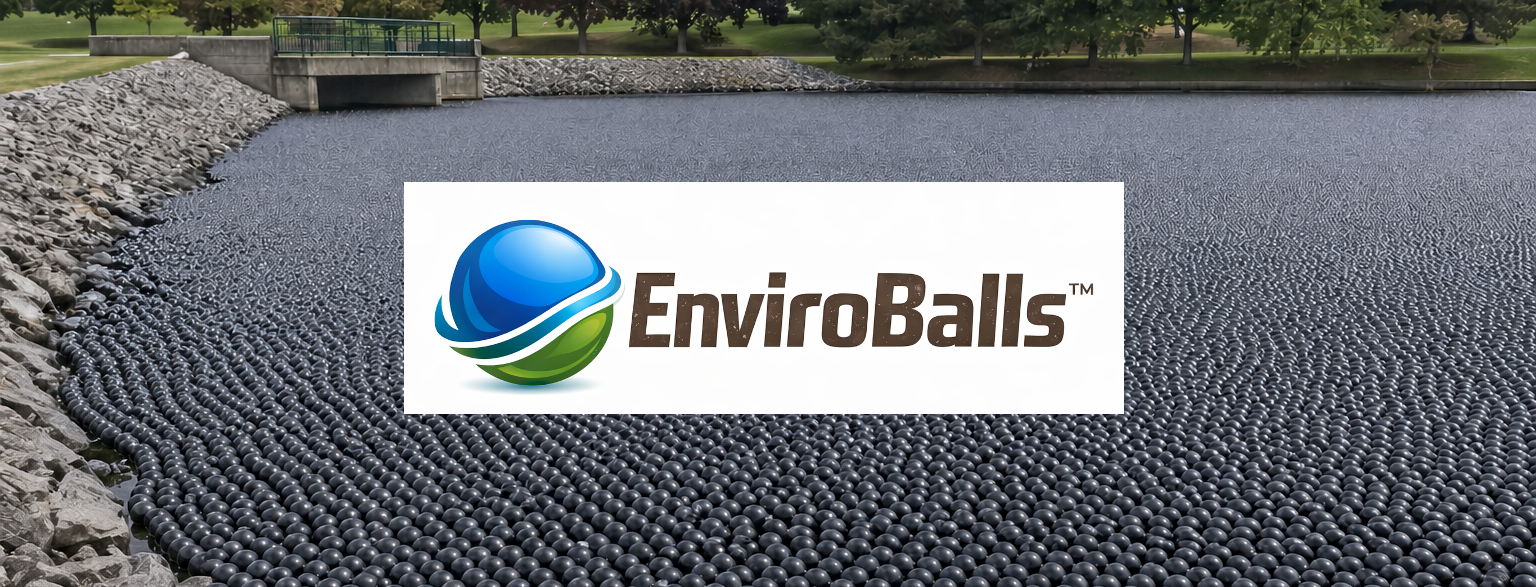
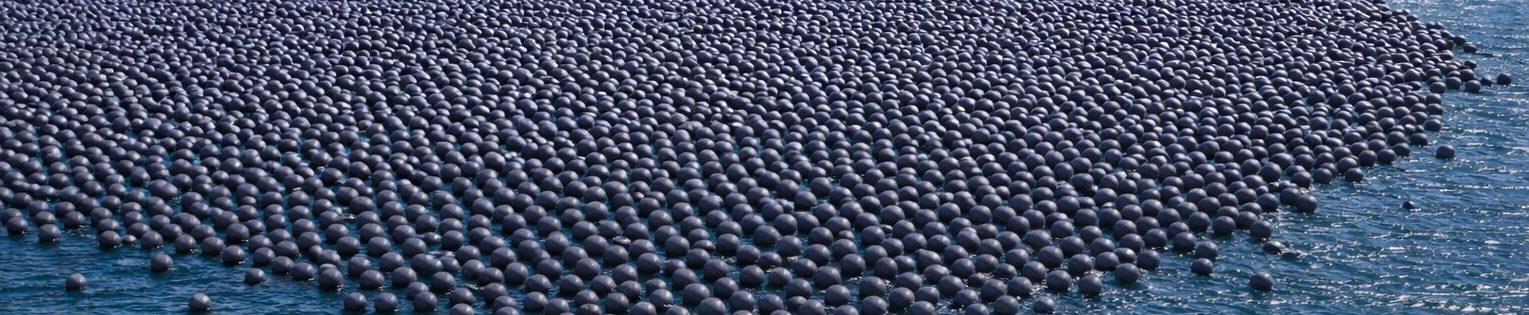
Bird balls are hollow HDPE spheres deployed across the water surface in sufficient density to form a floating layer. Their effectiveness is based on visual disruption as many waterfowl recognize open water visually. A surface covered by floating spheres no longer appears as water to waterfowl, making it less attractive as a landing, roosting, or feeding site. The birds move on.

Unlike netting or wire deterrent systems, bird balls do not create an overhead barrier above the water. Instead, they camouflage the water surface, allowing the system to self-adjust to water level changes; do not obstruct access to pumps, intake structures, or aeration equipment; and require no overhead infrastructure.

In addition to the bird deterrence, the floating layer also delivers secondary operational benefits by blocking sunlight, the floating layer can help limit algae growth and reduce evaporation, two problems that bird netting may not address.

Bird balls vs. pond netting

Water utilities often compare bird balls with pond netting when evaluating wildlife deterrence options. Both are passive systems that require no power and minimal ongoing management, but they differ in meaningful ways.

Factor Bird balls Pond netting


Installation ✓ Deploy directly onto water, no infrastructure Requires scaffolding or frame above water
Water level changes ✓ Self-adjusting, balls rise and fall with level Fixed installation, does not adjust
Equipment access ✓ Balls move aside for pumps, intakes, aerators Net must be cut or removed for access
Algae control ✓ Blocks sunlight, helps reduce algae growth No sunlight blocking, algae can still grow
Evaporation reduction ✓ Reduces evaporation as secondary benefit No evaporation benefit
Wildlife deterrence ✓ Surface camouflage deters attraction to water Physical barrier, does not camouflage water
Maintenance ✓ Replace individual balls as needed Repair or replace net sections when damaged


Pond netting remains appropriate in certain applications, particularly where physical exclusion of all wildlife is the objective. Bird balls offer greater operational flexibility and may deliver additional water quality benefits beyond netting.

Regulatory context: what utilities should consider

Surface water systems are required to evaluate and manage potential contamination pathways as part of watershed control and sanitary survey processes. Bird and wildlife activity is commonly recognized in practice as a potential contamination pathway.

During sanitary surveys, state primacy agencies assess watershed control programs, including how utilities identify and manage sources of contamination. Reservoirs with documented wildlife activity but no mitigation strategy may be noted during sanitary surveys, while systems with documented control measures can demonstrate proactive risk management.

Under the RTCR, total coliform or E. Coli detections require utilities to perform assessments to identify potential causes and implement corrective actions where needed. If bird activity is identified as a contributing factor, mitigation measures may be incorporated into the utility’s response.

Bird balls can serve as a passive, physical control measure that reduces wildlife access to the water surface. When used as part of a broader management approach, they can support documentation of actions taken to address identified risks.

Applications beyond drinking water reservoirs

Wastewater and stormwater facilities

Wastewater treatment lagoons and stormwater retention ponds attract the same species of birds as water reservoirs. Bird balls can be used as a wildlife deterrent in both applications without requiring additional infrastructure.

Mining and industrial process water

Open process water ponds in mining and industrial applications attract birds, which creates concerns with potential wildlife exposure risk water may contain tailings or chemicals. Wildlife ingestion of tailings water and chemical laden water may lead to wildlife exposure and, in some cases, fatalities. A covered pond surface removes the visual attractant that draws birds and wildlife, reducing the potential for wildlife exposure.

Recycled water storage

Recycled water storage facilities operate under water quality requirements for reuse applications. Bird activity introduces contamination that can cause unwanted water quality changes. Bird balls provide passive, continuous deterrence without requiring active management.

EnviroBalls™ for reservoir wildlife control

EnviroBalls™ are manufactured in the United States from UV-stabilized HDPE, designed for long-term deployment on drinking water reservoirs, lagoons, and industrial basins. Each EnviroBall™ is a hollow sphere that floats naturally on the water surface, self-organizes into a continuous protective layer and adjusts with changing water levels.

For utilities and infrastructure operators, U.S. manufacturing ensures compliance with Buy America requirements. If you are managing bird or wildlife activity on a reservoir, lagoon, or industrial water basin, contact the GES team to discuss the right configuration for your facility.

Request Information on EnviroBalls™

GES provides coverage calculations, product sizing, and project cost estimates for reservoir wildlife control applications. Contact Global Environmental Solutions to get started. 

GES Introduces EnviroBalls™ Floating Water Cover System for Reservoirs, Wastewater, Bird Deterrence, and Evaporation Control

enviroballs

Global Environmental Solutions, LLC (GES) is pleased to announce the launch of EnviroBalls™, a line of engineered floating water cover systems built for water utilities, industrial operators, and aviation facility managers. Made in the USA from UV-stabilized HDPE, EnviroBalls™ reduce evaporation loss, emissions, and water quality degradation from open water systems, issues that represent significant and often under-addressed operational costs for utilities and industrial operators. EnviroBalls™ are practical, durable, and easily deployable to support infrastructure operators.

What Are EnviroBalls™?

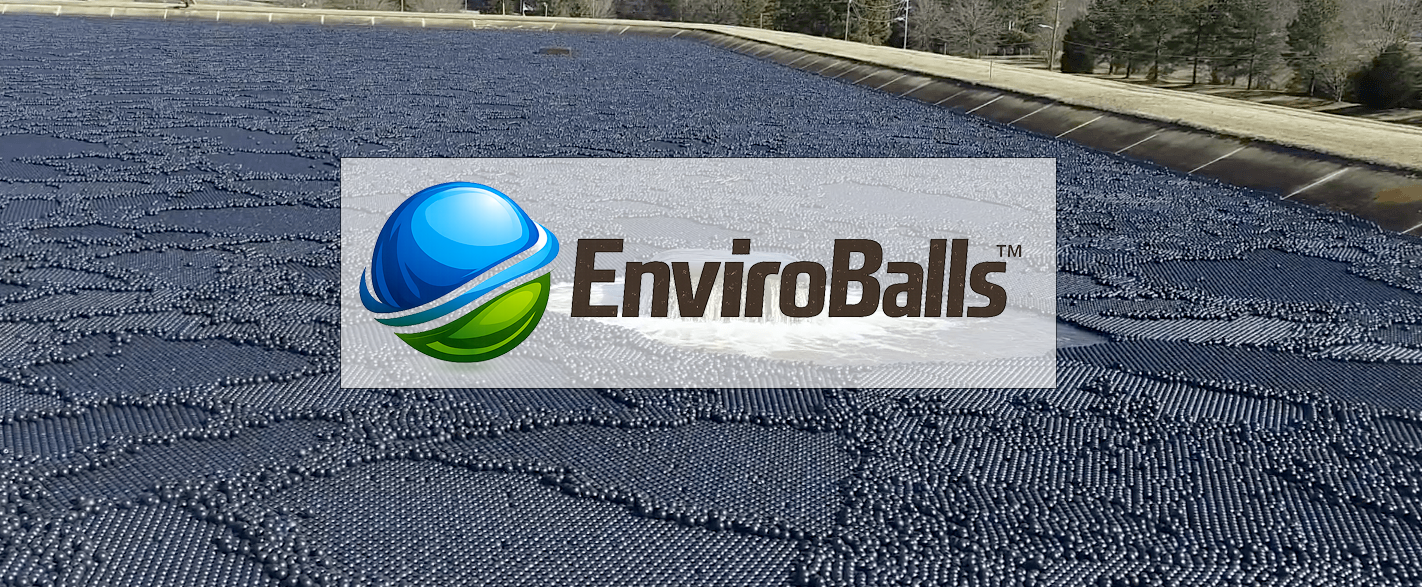
Sometimes referred to as shade balls, bird balls, or evaporation control balls, EnviroBalls™ are hollow, spherical floating cover balls made from UV-stabilized high-density polyethylene (HDPE) for managing open water systems. EnviroBalls™ form a continuous, self-adjusting surface barrier that floats freely on the water surface, reducing evaporation, blocking UV radiation, limiting chemical off-gassing, and keeping wildlife away. EnviroBalls™ are designed as a modular, rapidly deployable alternative to fixed cover systems that require anchoring, framing, and structural support. At full deployment, EnviroBalls™ form a near-continuous floating layer, with individual spheres naturally forming a dense packing arrangement that minimizes exposed water surface.

That flexibility is a big part of their appeal. Coverage can be added in phases as budgets allow, adjusted as conditions change, and deployed quickly without the lead times that come with custom rigid covers. Across reservoirs, industrial tanks, and airport stormwater ponds, the result is consistent, reliable surface coverage with very little ongoing maintenance.

Key product features:

  • UV-stabilized HDPE for long-term outdoor and chemical exposure durability
  • Hollow sphere design for buoyancy and maximum surface coverage
  • Consistent wall thickness and weight, verified through quality control
  • Modular and scalable, add or remove coverage as needs change
  • No framing, anchoring, or liner required
  • Made in USA

EnviroBalls™ Applications

Water Infrastructure: Reservoir Covers and Municipal Water Systems

Open water reservoirs take a beating. Evaporation cuts into water supply, sunlight drives algae growth, and rising water temperatures increase the cost of chemical treatment. For utilities managing drinking water reservoirs, wastewater lagoons, or stormwater detention ponds, those problems compound over time and show up in operating budgets.

EnviroBalls™ floating water covers address all of this from the surface down. Covering up to 98% of the water surface (application-dependent), the balls block UV radiation, slow phytoplankton and algae growth, reduce water temperature, and cut evaporation by up to 80 percent. For many operators, evaporation loss and treatment costs represent a measurable and recurring operating expense, making surface coverage solutions a key option for reducing costs. Customers often report meaningful reductions in water treatment costs after deployment.

Common water infrastructure applications:

  • Drinking water reservoirs and raw water storage
  • Treated water storage tanks and clear wells
  • Wastewater treatment lagoons and oxidation ponds
  • Stormwater retention basins and detention ponds
  • Irrigation storage ponds and agricultural water reserves


Industrial Applications: Tank Covers, Acid Mist Suppression, and Process Protection

Industrial process tanks present a different set of problems, and in some cases, dangerous ones. Open tanks in mining, chemical processing, and metals production can generate hazardous vapors, lose process chemicals to evaporation, and create ongoing compliance headaches. EnviroBalls™ float directly on the liquid surface, reducing exposure area and the problems that come with it.

The clearest example is acid mist control in copper electrowinning. Open electrolyte tanks produce sulfuric acid mist that corrodes equipment, creates health risks for workers, and draws regulatory attention. EnviroBalls™ cover the exposed electrolyte surface and suppress mist generation at the source, without adding equipment or disrupting the electrochemical process.

Industrial applications include:

  • Copper electrowinning and solvent extraction tanks (acid mist suppression)
  • Mining process water ponds and tailings impoundments
  • Chemical storage and process tanks
  • Oil and gas produced water containment
  • Industrial wastewater lagoons and evaporation ponds
  • Plating bath tanks and surface treatment systems

For industrial operators, the economics are straightforward. EnviroBalls™ cost less than rigid covers, install faster, and require less ongoing attention. They hold up in chemically aggressive environments where other cover solutions fail, and they scale easily when tank configurations change.

Aviation and Wildlife Control: Bird Balls for Airport Stormwater Ponds

Open water near airports is a wildlife hazard. Stormwater ponds, retention basins, and drainage channels attract waterfowl and shorebirds, and the FAA requires certificated airports to manage those risks proactively. It is not a compliance checkbox. Bird strikes are expensive, and in serious cases, dangerous.

EnviroBalls™ bird balls solve this problem passively. Deployed on airport stormwater ponds and drainage structures, the balls cover the open water surface, removing the landing area and feeding habitat that attract birds in the first place. No netting that can snag birds. No propane cannons that habituate over time and require staffing. Just continuous, low-maintenance deterrence that works around the clock.

Aviation and wildlife control applications:

  • Airport stormwater retention ponds and detention basins
  • Runway drainage channels and drainage features
  • Military airfield ponds and wildlife management areas
  • Industrial and commercial facility ponds in bird-sensitive zones
  • Golf courses and recreational water features near flight paths

EnviroBalls™ align with FAA Advisory Circular guidance on wildlife hazard management and are a recognized approach for bird deterrence at airport stormwater facilities.

Specialty Applications: Floating Media and Surface Coverage

EnviroBalls™ have also found a home in select specialty applications. Their consistent dimensions, buoyancy, and chemical inertness make them worth considering for use as static floating media in certain water treatment configurations, including biofilm carrier systems and controlled aeration environments. Their HDPE construction is compatible with a wide range of process chemistries, and because deployment is modular, operators can test partial coverage before committing to full installation.

Why EnviroBalls™?

EnviroBalls™ are differentiated by the easily scalable deployment, consistent quality, and engineering support designed for real-world infrastructure applications.

Made in USA. EnviroBalls™ are manufactured domestically. That means shorter lead times, supply chain reliability, and product quality that is not dependent on overseas logistics. It also supports compliance with Buy American requirements in federally funded infrastructure projects.

Consistent quality control. Wall thickness and weight are verified through GES manufacturing protocols. Consistency matters in the field; poor quality can impact long-term buoyancy and creates gaps in coverage with unpredictable performance.

Engineering support. GES works with customers to correctly size deployments for their specific application, whether that is a two-acre reservoir or a row of industrial process tanks. Further project support on material specifications, installation services, best practices, and engineering cut sheets are available.

Material performance. UV-stabilized HDPE is most often selected specifically for resistance to UV degradation, temperature cycling, and chemical exposure. EnviroBalls™ are built to hold up in the environments where they are deployed, not just in a product data sheet.

Scalable deployment. Projects can start small and expand. There is no minimum order that forces operators to over-cover, and no rigid infrastructure that locks in a configuration. EnviroBalls™ work with how infrastructure budgets and projects evolve.

“In developing EnviroBalls™, we focused on delivering a solution our customers can rely on in critical water infrastructure applications. The name reflects a product that is engineered, practical, and built to perform consistently in the field,” said Rocco Petrilli, Chief Revenue Officer of Global Environmental Solutions.


“EnviroBalls™ water covers are a proven, straightforward solution for reducing evaporation, limiting algae growth, and protecting water quality. GES entered this market to provide a high-quality, engineered solution that customers can depend on across municipal and industrial applications,” added Petrilli.

Get Started with EnviroBalls™

GES works directly with utilities, industrial operators, water and wastewater plant operators, environmental engineers, and airport facility managers to evaluate applications, model coverage, and support deployment. GES provides support to help customers meet performance goals for each specific project.

To request a project evaluation or consultation visit www.EnviroBalls.com.

About Global Environmental Solutions, LLC

Global Environmental Solutions (GES) provides environmental control technologies for dust suppression, soil stabilization, surface management, and water infrastructure applications. GES serves municipal, industrial, mining, construction, transportation, and agricultural markets across North America. For more information, visit www.globalenvironmentalsolutions.com.

Floating Water Covers for Reservoirs, Lagoons, and Industrial Water Systems

EnviroBalls

A guide for engineers, utilities, and infrastructure operators evaluating modular floating cover systems for open water storage.

What Is a Floating Water Cover?

Evaporation, algae blooms, wildlife contamination, and UV-driven water quality degradation cost open water facilities in lost volume, increased treatment costs, and regulatory exposure every year. Floating water covers (sometimes called shade balls, bird balls, or modular reservoir covers) are one of the most cost-effective tools available to address all four problems with a single deployment.

A floating water cover system is a modular surface protection technology that partially or fully covers open water storage basins. The most widely used type uses hollow plastic spheres (typically manufactured from UV-stabilized high-density polyethylene, or HDPE) that float across the water surface, self-organize under wind and current, and collectively form a continuous protective layer.

That floating layer reduces solar radiation reaching the water surface, limits evaporation, discourages wildlife from landing, and helps maintain more stable water chemistry over time. Because the system is modular and requires no structural anchoring or electrical power, it adapts to any basin geometry and coexists with existing infrastructure: aerators, intake structures, and monitoring equipment remain fully accessible.

65–80%

Evaporation reduction measured in peer-reviewed field studies of floating sphere cover systems

$1.1B+

Spent by U.S. communities on algae prevention and treatment between 2010 and 2020, per the Environmental Working Group

10+ yr

Minimum service life of UV-stabilized HDPE floating sphere systems under continuous outdoor exposure

Why Engineers use floating Water Covers

Evaporation reduction

In warm, arid, or high-wind environments, surface evaporation can remove substantial volumes of stored water annually. Peer-reviewed field studies of floating sphere cover systems have measured evaporation reductions of 65 to 80 percent under summer conditions, a meaningful performance gain for any facility where water conservation or storage capacity is a concern.

Algae control

Algae growth is driven by sunlight. Open reservoirs and treatment lagoons are natural bloom environments, and unchecked algae creates cascading operational problems: taste and odor events in drinking water, oxygen depletion in treatment lagoons, increased chemical dosing costs, and biological instability across storage systems. According to the Environmental Working Group, U.S. communities spent more than $1.1 billion between 2010 and 2020 preventing and treating algae blooms, and that figure is widely considered an undercount. Floating covers reduce light penetration at the water surface, cutting off the primary algae growth driver without chemical intervention.

Bird control and wildlife mitigation

Open water surfaces attract birds and wildlife, which introduce biological contaminants and create regulatory compliance exposure for utilities subject to surface water treatment rules. Floating sphere covers create a mobile, unstable surface layer that discourages birds from landing, making them an effective passive wildlife deterrent that requires no ongoing management. Floating sphere covers are also used in stormwater and retention ponds on or near airport property, where wildlife hazard management is a safety and FAA compliance requirement.

Water quality protection

UV exposure drives photochemical reactions in stored water, including the breakdown of disinfectants and the formation of regulated byproducts. A well-known municipal case involved a major U.S. reservoir where a sunlight-driven reaction between chlorine and bromide was producing bromate, a regulated carcinogen, in the drinking supply. Floating sphere covers were deployed specifically to suppress that reaction. Limiting UV exposure at the surface helps maintain more stable water chemistry and extends the window in which stored water holds its quality specifications.

Applications by Sector

Drinking water reservoirs

Municipal utilities use floating sphere systems to protect finished and raw water reservoirs from algae, wildlife, and photochemical degradation. Shade balls, the term most commonly associated with drinking water reservoir applications, are the same modular floating sphere technology applied specifically to potable water storage and water quality protection. Floating covers provide a cost-effective alternative to rigid structural covers while meeting the wildlife deterrence and water quality protection requirements common in surface water treatment programs.

Wastewater lagoons and stabilization ponds

Floating covers are widely used in facultative lagoons, equalization basins, and polishing ponds to stabilize biological treatment conditions. By reducing algae growth without interfering with aeration equipment, floating sphere systems help operators maintain more consistent effluent quality and reduce the operational variability that comes with seasonal algae blooms.

Stormwater retention and detention ponds

Stormwater ponds are difficult to manage chemically and often subject to heavy wildlife activity. Floating covers offer passive algae suppression and bird deterrence without requiring treatment infrastructure. They are a practical option for systems that receive intermittent flow and are managed with minimal operator intervention.

Industrial water storage and cooling basins

Industrial facilities managing cooling water basins, mining water storage, and process water ponds use floating covers primarily for evaporation control. In high-temperature or high-wind environments, evaporative losses from uncovered industrial basins represent both a direct water cost and an operational efficiency loss. Floating covers reduce both.

Desalination brine ponds and recycled water storage

Desalination concentrate management ponds benefit from reduced evaporative losses and minimized salt crust formation at the surface. Recycled water storage applications use floating covers to protect treated water quality between treatment and reuse, maintaining water quality specifications across the storage window.

Floating Balls vs. Floating Membrane Covers

Engineers evaluating reservoir cover systems typically compare floating sphere systems against floating geomembrane covers. Both protect open water surfaces, but they differ significantly in installation complexity, cost, and operational flexibility.

Factor

Floating sphere system

Floating membrane cover

Installation complexity

No anchoring, no site prep

Structural anchoring required

Capital cost

Lower per square foot

Higher: structural and material costs

Irregular basin shapes

Self-adapting, no fabrication

Custom fabrication required

Equipment access

Balls float around structures

Penetrations require engineering

Maintenance

Replace individual balls as needed

Seam inspection and patching required

Scalability

Add balls incrementally

Full replacement for expansion

Floating membranes are the right choice when full hermetic sealing is a regulatory requirement: odor containment, certain chemical storage applications, or situations where zero surface exposure is mandated. For most open reservoir, lagoon, and industrial basin applications, floating sphere systems offer better cost-to-performance with significantly lower installation complexity and risk.

Designing a Floating Cover System

Floating sphere cover systems are sized based on four primary variables: total water surface area, target coverage percentage, local wind and environmental conditions, and operational access requirements for existing equipment.

As a general reference, 4-inch (100mm) HDPE balls (the industry standard size) pack at approximately 10 balls per square foot. A one-acre reservoir at 95 percent coverage requires in the range of 400,000 to 450,000 balls. Coverage targets vary by application: drinking water reservoirs typically target 95 to 98 percent coverage, while industrial evaporation control applications may achieve acceptable results at 85 to 90 percent.

Wind exposure is an important design consideration. In high-wind environments, balls may concentrate on the leeward shore, reducing coverage on the windward side. Perimeter containment systems or directional baffles can address this in exposed installations.

GES works directly with engineers and project teams to develop coverage calculations and system sizing for specific site conditions, including irregular basin geometries, variable water levels, and installations with existing aeration or intake infrastructure.

EnviroBalls™ by Global Environmental Solutions

EnviroBalls™ are manufactured in the United States from UV-stabilized HDPE, engineered specifically for municipal and industrial water infrastructure applications. Each EnviroBall™ is a hollow sphere available in black (the standard color for maximum solar blocking), with additional color options available for applications where heat gain or visual identification is a concern.

UV stabilization is not a commodity feature. HDPE formulations without adequate UV additive packages degrade under sustained sun exposure, losing structural integrity and releasing microplastics into the water they are deployed to protect. UV-stabilized HDPE floating sphere systems have a documented minimum service life of 10 years under continuous outdoor exposure, a specification that should be verified for any floating sphere product under evaluation.

For utilities and contractors working on federally funded infrastructure projects, including those funded through the Infrastructure Investment and Jobs Act or state revolving fund programs, U.S. manufacturing ensures compliance with Buy America provisions without sourcing waivers or added procurement documentation burden.

GES engineering support includes reservoir coverage calculations, product sizing, cost estimates, and installation guidance, provided at no cost during the project evaluation phase. If you are assessing floating cover options for a reservoir, lagoon, or industrial basin, contact the GES team to get sizing and specifications for your specific site.

Request Project Information

GES engineers provide coverage calculations, product sizing, and project cost estimates, no commitment required. Contact Global Environmental Solutions to get started.

Global Environmental Solutions Acquires Environmental Controls Company (ECC LLC)

FOR IMMEDIATE RELEASE

Manchester, NH – January 29, 2026 Global Environmental Solutions, LLC (GES), a leading provider of environmental control solutions, is pleased to announce the completion of an asset acquisition of Environmental Controls Company, LLC (ECC), effective January 25, 2026.

The acquisition expands GES’s product portfolio and market reach by adding ECC’s proven modular floating cover technologies for stormwater systems, reservoirs, water and wastewater treatment facilities, mining operations, airports, and chemical storage applications. ECC’s products have a long history of reliable performance in demanding environmental conditions and are trusted by municipalities and industrial operators nationwide.

The GES leadership team stated, “This acquisition is a natural strategic fit for GES, as ECC’s floating cover systems complement GES’s existing dust control, soil stabilization, and surface management solutions, allowing us to serve customers across both land and water infrastructure with a broader, more integrated platform.”

As part of the transaction, GES will continue to support all existing ECC customers without interruption. Manufacturing, product performance, and customer relationships will be maintained, with additional investments planned to strengthen logistics, inventory availability, and technical support.

“We selected GES as the right successor for this business because of their disciplined approach, operational capability, and commitment to customer service. I’m confident that ECC’s customers will be well supported as the business continues to grow under GES’s leadership”, added ECC founder Keith Stuck.

Over the coming weeks, GES will integrate ECC’s operations and product offerings into its broader organization.

About Global Environmental Solutions, LLC

Global Environmental Solutions (GES) provides innovative environmental control technologies for dust suppression, soil stabilization, surface management, and water infrastructure applications. GES serves municipal, industrial, mining, transportation, and agricultural markets across North America. www.globalenvironmentalsolutions.com

About Environmental Controls Company, LLC

Environmental Controls Company is a long-established provider of modular floating cover systems designed to reduce evaporation, control odors, improve water quality, and protect critical water assets. www.eccllc.us