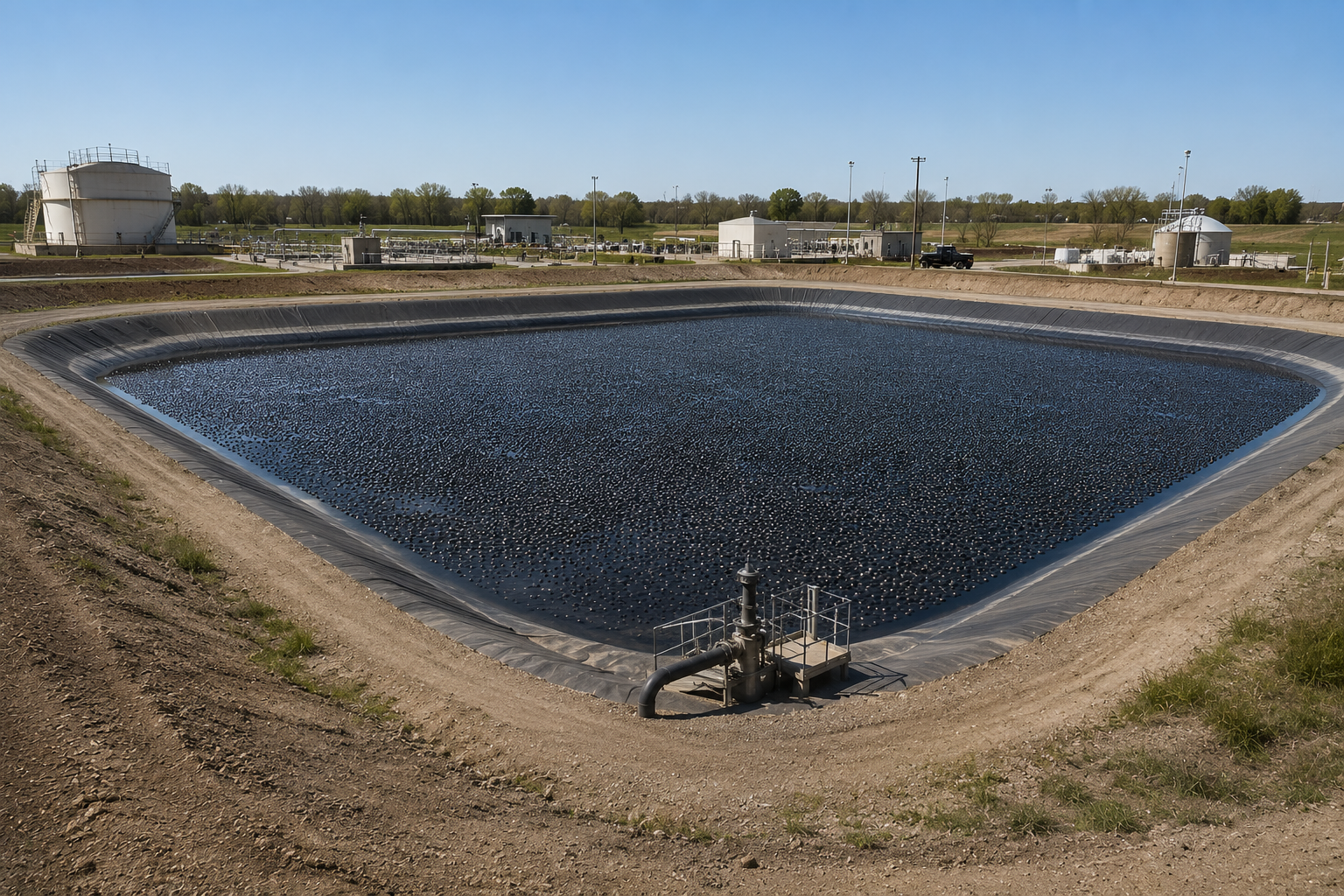
Floating Covers for Wastewater Lagoons

Enviroballs

Wastewater lagoons are one of the most cost-effective methods of treating municipal and industrial wastewater, but their large exposed surface area creates operational challenges that become more pronounced over time. Algae growth, odor emissions, and evaporation losses can affect treatment performance, increase operating costs, and create compliance concerns for utilities and industrial facilities alike.

Floating covers address these issues directly by reducing surface exposure while preserving the lagoon’s underlying treatment process. Depending on the application, floating wastewater covers can provide significant reductions in sunlight penetration, evaporation, and odor emissions while requiring minimal infrastructure modifications.

This article examines how floating covers perform in wastewater lagoon applications, which cover technologies are best suited for different lagoon designs, and the factors operators should evaluate when specifying a wastewater lagoon cover system.

Why Wastewater Lagoons Benefit from Surface Coverage

Wastewater lagoons rely on biological treatment processes that are influenced by sunlight, temperature fluctuations, wind exposure, and surface conditions. Open lagoon surfaces are frequently associated with three common operational challenges.

Algae Growth

Sunlight penetrating the water surface promotes algae growth, particularly during warmer months. Excessive algae can contribute to elevated total suspended solids (TSS) in lagoon effluent, increase treatment variability, and create additional operational challenges for downstream processes.

Reducing light penetration through the water surface can help minimize algae growth without requiring routine chemical treatment in many applications.

Odor Generation

Facultative and anaerobic wastewater lagoons may produce hydrogen sulfide, ammonia, and other volatile compounds as part of normal biological treatment processes. When these compounds escape freely from the water surface, nearby residential or commercial areas may experience odor impacts that result in complaints and increased regulatory scrutiny.

While floating covers are not intended to provide complete gas containment unless specifically designed to do so, reducing exposed surface area can significantly reduce odor emissions in many wastewater applications.

Evaporation Losses

In warm, arid, or windy environments, wastewater lagoons can experience substantial evaporation losses over time. Beyond water loss itself, evaporation may increase constituent concentrations and influence downstream treatment requirements.

Floating cover technologies have been shown to substantially reduce evaporation losses in many applications. Actual performance will depend on factors including coverage percentage, local climate conditions, wind exposure, and lagoon geometry.

By addressing algae growth, odor emissions, and evaporation simultaneously, floating covers provide utilities and industrial operators with an additional tool for improving lagoon performance and operational consistency.

Benefits of Floating Covers for Wastewater Lagoons

Floating cover systems may provide several operational benefits, including:

  • Reduced sunlight penetration that can help suppress algae growth
  • Reduced odor emissions from exposed lagoon surfaces
  • Reduced evaporation losses
  • Modular installation with minimal infrastructure requirements
  • Automatic adjustment to changing water levels
  • Compatibility with many aeration and mixing configurations
  • Reduced maintenance requirements compared to some traditional cover systems
  • Flexible coverage percentages that can be tailored to project objectives

The specific benefits achieved will depend on lagoon design, treatment objectives, operating conditions, and the selected cover technology.

How Floating Sphere Systems Work on Wastewater Lagoons

Floating sphere systems are modular hollow plastic balls that float freely on the water surface and naturally pack together to form a self-adjusting floating layer. Similar technologies have been used for decades in water and wastewater applications to reduce surface exposure while accommodating changing operating conditions.

On wastewater lagoons, floating sphere systems perform several functions simultaneously.

The spheres reduce ultraviolet and visible light penetration that contributes to algae photosynthesis, helping suppress bloom formation in many applications. They also reduce the amount of exposed water surface available for evaporation and the release of volatile compounds that contribute to odors.

Because the spheres float independently rather than functioning as a single connected membrane, they automatically rise and fall with changing water levels without requiring anchoring or tensioning systems.

Floating sphere systems may also be well suited for retrofits because they can accommodate many existing lagoon configurations. Depending on the application, the spheres can move around fixed infrastructure such as mixers, aeration equipment, and sampling locations without requiring significant modifications to existing systems.

Matching the Cover Technology to the Lagoon Type

Not every wastewater lagoon has the same treatment objectives, and the most appropriate cover technology will depend on the lagoon’s specific function.

Facultative Lagoons and Stabilization Ponds

Facultative lagoons are commonly concerned with algae management, evaporation reduction, and odor control. Floating sphere systems can substantially reduce sunlight penetration while allowing coverage percentages to be tailored around treatment objectives and operational considerations.

Aerated Lagoons and Equalization Basins

Aerated lagoons and equalization basins require cover systems that can accommodate mechanical or diffused aeration equipment. Floating sphere systems are often well suited for these applications because they adjust naturally with water movement and can be designed around existing infrastructure requirements.

Polishing Ponds

Polishing ponds frequently use floating covers to minimize late-stage algae growth that may affect final effluent quality before discharge or reuse applications.

Anaerobic Lagoons and Digester Ponds

When complete odor containment or biogas collection is required, sealed floating geomembrane covers are frequently the preferred solution. These systems are capable of providing substantially greater gas containment than modular floating sphere technologies and are often selected when regulatory or process requirements demand full surface sealing.

Selecting the appropriate cover technology should consider treatment objectives, regulatory requirements, equipment configurations, and long-term maintenance expectations.

Floating Sphere Systems vs. Floating Geomembrane Covers

Wastewater lagoon operators evaluating floating covers typically compare floating sphere systems with floating geomembrane covers.

Floating geomembrane covers form a continuous barrier across the lagoon surface and are generally preferred when projects require:

  • Biogas collection
  • Complete or near-complete odor containment
  • Full surface isolation
  • Specific permit or regulatory requirements for gas management

These systems typically involve greater installation complexity, including anchoring systems, membrane seaming, and periodic inspection requirements.

Floating sphere systems offer a different set of advantages, including:

  • Simplified installation
  • Modular and scalable deployment
  • No membrane seaming requirements
  • Automatic adjustment to changing water levels
  • Compatibility with many existing lagoon configurations

For many facultative lagoons, aerated lagoons, equalization basins, and polishing ponds where algae control, evaporation reduction, and odor mitigation are the primary objectives, floating sphere systems may provide an attractive cost-to-performance alternative.

The appropriate solution will ultimately depend on the operational goals of the individual facility.

Sizing a Floating Cover for a Wastewater Lagoon

Proper sizing of a floating wastewater cover involves more than simply calculating surface area.

Engineers should consider:

  • Total lagoon surface area
  • Desired coverage percentage
  • Treatment objectives
  • Local wind and climate conditions
  • Existing aeration or mixing equipment
  • Access requirements for maintenance and sampling
  • Regulatory or permit considerations

Coverage requirements are highly application-specific. A lagoon experiencing significant algae issues may warrant a different design approach than one primarily seeking evaporation reduction or odor mitigation.

Proper sizing helps balance performance objectives with project costs while ensuring the selected cover system complements existing treatment operations.

Working With GES on Wastewater Lagoon Coverage

Every wastewater lagoon presents a unique combination of treatment objectives, environmental conditions, and operational requirements. Selecting the appropriate floating cover technology requires consideration of lagoon type, desired performance outcomes, existing infrastructure, and long-term operating expectations.

GES works directly with utilities, consulting engineers, contractors, and industrial operators to evaluate wastewater lagoon cover requirements and develop preliminary sizing and cost estimates for floating sphere systems.

EnviroBalls® floating covers are manufactured in the United States, which may help support domestic sourcing requirements for federally funded infrastructure projects, including certain projects funded through the Infrastructure Investment and Jobs Act and State Revolving Fund programs.

If you are evaluating floating cover options for a wastewater lagoon, contact the GES team for a no-obligation coverage assessment and preliminary sizing estimate tailored to your specific application.
Long-Term Dust Control is a Water Conservation Strategy: Saving Millions of Gallons While Reducing Costs

Dust Control

For decades, water has been the most commonly used dust suppressant across construction sites, mines, aggregate operations, solar farms, industrial facilities, and municipal projects. It is readily available, relatively inexpensive on a per-gallon basis, and simple to apply. However, water also presents one significant limitation, it evaporates.

In many environments, water applied for dust control may provide only short-term performance before additional applications become necessary. The result is that some projects consume millions of gallons of water annually simply maintaining acceptable dust conditions.

Today, long-term dust control technologies are changing how owners and operators approach water management. Rather than continually replacing moisture lost to evaporation, engineered dust suppressants can substantially reduce water consumption while simultaneously lowering labor requirements, reducing equipment utilization, and improving operational efficiency.

Increasingly, long-term dust control is becoming more than an operational expense, it is becoming a water conservation strategy.

The Hidden Cost of Water-Based Dust Control

Water is often viewed as the least expensive dust control option because the material itself is inexpensive or readily available. However, the true cost of water-based dust suppression extends well beyond the cost of the water itself.

Daily or multiple daily applications may require:

  • Water trucks and associated equipment
  • Equipment operators
  • Fuel consumption
  • Vehicle maintenance and repairs
  • Tires and replacement parts
  • Water sourcing and pumping costs
  • Increased road maintenance requirements
  • Additional traffic interruptions during application
  • Equipment rentals or capital expenditures
  • Labor costs associated with repeated applications

Under warm, dry, or windy conditions, water may evaporate quickly enough to necessitate multiple applications throughout the day. In these situations, operators are often paying repeatedly to replace moisture that may only provide temporary dust suppression benefits.

The cumulative costs can become significant over the life of a project.

How Much Water Do Dust Control Operations Use?

Actual water consumption varies considerably depending upon climate conditions, traffic volumes, application frequency, and project size. Even relatively modest operations, however, may consume substantial volumes of water over the course of a year.

Consider a project utilizing a single 4,000-gallon water truck making ten applications per day.

  • 40,000 gallons per day
  • 200 operating days annually
  • 8 million gallons of water annually

Larger operations utilizing multiple water trucks may consume tens of millions of gallons of water each year for dust control purposes alone.

While water will remain an appropriate solution for some applications, many projects benefit from evaluating the total cost of ownership associated with continual water applications rather than considering water costs in isolation.

Why Long-Term Dust Control Technologies Use Less Water

Long-term dust suppressants approach dust control differently than water-based applications.

Rather than relying solely upon temporary moisture addition, long-term dust control technologies are designed to improve particle retention to the surface.

The potential benefits include:

  • Reduced application frequency
  • Lower annual water consumption
  • Reduced labor requirements
  • Lower fuel usage
  • Reduced water truck utilization
  • Improved operational efficiency
  • Reduced traffic interruptions associated with dust control activities

Because every project is unique, the appropriate dust control technology will depend upon factors including traffic volumes, surface materials, environmental conditions, performance requirements, and budget considerations.

For many applications, reducing water consumption becomes both an environmental and economic benefit.

Dust Control is Becoming a Water Conservation Strategy

Historically, dust control has been viewed primarily as an operational requirement. Increasingly, however, owners and operators are incorporating water conservation objectives into project planning and operations.

Water conservation initiatives are becoming increasingly important across:

  • Construction projects
  • Solar energy developments
  • Mining operations
  • Aggregate facilities
  • Industrial sites
  • Municipal infrastructure projects
  • Landfills and waste management facilities
  • Transportation corridors and temporary access roads

Reducing annual water consumption can provide meaningful operational benefits regardless of whether a project’s primary objective is sustainability, cost reduction, or improved dust control performance.

For many facilities, reducing water consumption also means reducing labor requirements, equipment utilization, and maintenance costs simultaneously.

Long-term dust control technologies frequently allow owners and operators to pursue all of these objectives together.

Water Trucks vs. Long-Term Dust Control Technologies

When evaluating dust control strategies, project teams should consider more than simply material costs. Actual performance will vary based upon product selection, application rates, site conditions, and project objectives. The appropriate dust control strategy should always consider the total cost of ownership over the anticipated life of the project.

Parameter Water Trucks Long-Term Dust Control
Water Consumption High Low
Application Frequency Daily Less Frequent
Labor Requirements High Low
Fuel Consumption High Low
Equipment Utilization High Low
Operational Interruptions High Low
Performance Duration Short-Term Longer Lasting
Water Conservation Benefits Low High

Applications Where Water Conservation Matters

Solar Farms

Large solar developments frequently encompass hundreds or thousands of acres requiring ongoing dust management during both construction and operations. Reducing water truck utilization can provide meaningful labor, water, and operational savings over the life of the project.

Mining Operations

Mining facilities often operate continuously while managing extensive haul roads and high traffic volumes. Even modest reductions in water consumption can represent substantial annual savings at large sites.

Aggregate Facilities

Quarries and aggregate operations routinely balance dust control requirements with production objectives. Long-term dust suppressants may reduce application frequency while helping maintain safe and efficient operations.

Construction Projects

Temporary access roads, staging areas, and infrastructure projects frequently require repeated dust control applications. Reducing water usage may provide both economic and logistical benefits for contractors.

Municipal and Industrial Facilities

Municipalities and industrial operators are increasingly evaluating dust control strategies through the lens of operational efficiency and resource management. Long-term dust control technologies may support both objectives simultaneously.

Choosing the Right Long-Term Dust Control Solution

No single dust control technology is appropriate for every application.

Some projects benefit from DustLess® or DirtGlue® Balance suppressants designed for routine maintenance applications, while others require DirtGlue® for longer-term soil stabilization withstanding significant traffic or environmental exposure.

Factors influencing product selection include:

  • Surface material characteristics
  • Traffic volumes and vehicle types
  • Climate and rainfall conditions
  • Project duration
  • Water availability
  • Budget considerations
  • Environmental and operational requirements
  • Desired maintenance intervals

Proper product selection begins with understanding the operational objectives of the project rather than simply identifying a dust control product.

How Much Water Could Your Project Save?

Every project is different. Actual water savings will depend upon:

  • Project size
  • Water truck utilization
  • Climate conditions
  • Traffic volumes
  • Surface characteristics
  • Application frequency requirements
  • Desired dust control performance

Projects transitioning from frequent water applications to appropriately selected long-term dust control technologies frequently experience substantial reductions in water consumption while also realizing operational efficiencies in labor, fuel usage, and equipment utilization.

Evaluating these opportunities requires considering the complete operational picture rather than simply comparing material costs.

Water Consumption Comparison with Long-Term Dust Suppression
Water Use Long-Term Dust Control
A Single 4,000-gallon water truck making 4 applications per day may use:

  • 16,000 gallons per day
  • (200 operating days)
A Single long-term dust control applications may utilize and provide:

  • Single Application
  • Dust Control lasting 3-12+ months
Total Water Use Annually 

3,200,000 gallons

Total Water Use with DustLess® 

0 Gallons

DustLess® could save 3,200,000 gallons annually in this example application*

*Actual water savings will depend upon project size, traffic volumes, climate conditions, application rates, and maintenance requirements.

Partnering With GES for Long-Term Dust Control

GES works directly with owners, contractors, engineers, and operators to evaluate long-term dust control strategies across a wide range of applications.

Depending upon project objectives, our team can help evaluate:

  • Annual water consumption estimates
  • Water truck utilization requirements
  • Dust control operating costs
  • Long-term maintenance requirements
  • Product selection considerations
  • Water conservation opportunities
  • Preliminary application and budget estimates

Long-term dust control is no longer simply about controlling dust. For many projects, it has become an opportunity to conserve water, improve operational efficiency, and reduce the total cost of maintaining site conditions over time.

If your project is utilizing daily or repeated water applications for dust control, contact the GES team for a complimentary project evaluation and water conservation assessment.

Floating Water Covers for Industrial Sites: Reducing Evaporation, Algae Growth, and Maintenance Costs

enviroballs

Water is one of the most valuable resources at many industrial facilities, yet it is often taken for granted until it becomes expensive to replace or difficult to manage. Whether it’s a stormwater retention pond, fire suppression reservoir, wastewater lagoon, or process water storage basin, maintaining water quality and minimizing maintenance costs are ongoing challenges across many industries.

Open water storage systems are continuously exposed to sunlight, wind, and changing weather conditions. Over time, these factors contribute to evaporation losses, algae growth, increased maintenance requirements, and higher operating costs. While each issue may seem relatively minor on its own, the combined impact can become significant over the life of a facility.

For industrial operators looking to improve water conservation efforts and reduce maintenance demands, floating water covers offer a practical and passive solution.

Common Industrial Applications

Floating water covers are utilized in a wide range of industrial applications, including:

  • Stormwater retention and detention ponds
  • Fire suppression water storage reservoirs
  • Wastewater treatment lagoons
  • Process water storage systems
  • Mining and aggregate operations
  • Equalization basins
  • Reclaimed water storage facilities
  • Manufacturing and chemical processing operations
  • Cooling water storage systems

Although every facility has unique operational requirements, many are facing the same fundamental challenge—protecting valuable water resources while controlling operating costs.

Understanding the Cost of Evaporation

When discussing water conservation, most people immediately think about water usage inside a facility. However, water losses from evaporation can represent a significant and often overlooked expense.

The true cost of evaporation extends beyond simply replacing lost water. Facilities may also incur expenses associated with:

  • Purchasing or treating replacement water
  • Pumping and handling costs
  • Additional labor requirements
  • Increased chemical treatment needs
  • Operational inefficiencies during periods of drought or water restrictions

Reducing evaporation can help facilities better manage both costs and sustainability objectives. While the amount of water lost will vary depending on climate conditions and surface area, large water storage systems can lose substantial volumes of water over time.

Minimizing Algae Growth

Algae growth is another common challenge associated with open water storage systems. Excessive sunlight promotes algae development, which may contribute to:

  • Increased maintenance requirements
  • Additional chemical treatment costs
  • Equipment fouling
  • Water quality concerns
  • Unpleasant odors
  • Sediment accumulation over time

Many facilities rely on periodic chemical treatments to address algae growth after it occurs. An alternative approach is to minimize the conditions that allow algae to thrive in the first place.

Floating water covers work by limiting the amount of sunlight reaching the water’s surface, helping to reduce algae growth while lowering the frequency of maintenance activities.

Reducing Maintenance Requirements

Maintenance costs are often difficult to quantify because they are distributed across labor, chemicals, equipment, and operational downtime. Open water systems may require ongoing attention throughout the year, including:

  • Water replenishment
  • Chemical treatments
  • Vegetation management
  • Surface cleaning
  • Equipment inspections
  • Pump and piping maintenance

Small improvements in maintenance requirements can provide meaningful savings when considered over the lifetime of an industrial facility.

One advantage of floating water covers is their simplicity. Because they are passive systems with no moving parts, they continuously provide surface coverage without requiring power or complex operating procedures.

Supporting Sustainability Initiatives

Water conservation has become an increasingly important component of corporate sustainability programs. Organizations across many industries are establishing goals related to:

  • Water conservation
  • Resource efficiency
  • Reduced chemical consumption
  • Improved environmental stewardship
  • Lower operating costs

Projects that simultaneously improve sustainability performance and provide economic benefits are often among the most attractive investments for industrial facilities.

Reducing evaporation losses not only conserves water but may also decrease the resources required to maintain water storage systems over time.

Selecting a Floating Water Cover Solution

No two water storage applications are exactly alike. Before selecting a floating water cover technology, facilities should consider several factors, including:

  • Climate conditions
  • Pond size and geometry
  • Water chemistry
  • Maintenance objectives
  • Durability requirements
  • UV resistance
  • Installation considerations
  • Long-term operating costs

Understanding both the operational requirements and performance objectives of a project is essential when evaluating potential solutions.

A Practical Approach to Water Management

Industrial facilities are continually challenged to do more with fewer resources. Technologies that improve operational efficiency without increasing complexity are often the most successful over the long term.

Floating water covers provide a practical approach to addressing several common water management challenges simultaneously. Depending upon the application, facilities may realize benefits that include:

  • Reduced evaporation losses
  • Lower algae growth potential
  • Reduced maintenance requirements
  • Improved water conservation
  • Lower chemical usage
  • Enhanced environmental performance
  • Long-term operational savings

As industries continue investing in sustainable infrastructure and water conservation initiatives, protecting valuable water resources will remain an important priority.

EnviroBalls™ Floating Water Covers

EnviroBalls™ Floating Water Covers are designed for demanding industrial applications requiring long-lasting performance and minimal maintenance. Our team works with customers to evaluate project requirements, estimate material quantities, and identify opportunities to improve water conservation and reduce operating costs.

If you’re evaluating options for industrial water storage systems, we’d be happy to discuss your application and determine whether a floating water cover is an appropriate solution for your facility, please contact us today at EnviroBalls@DirtGlue.com or by connecting with us here.

The Economics of Industrial Dust Control

dust control

Reducing Operating Costs Through Long-Term Dust Suppression

Global Environmental Solutions | White Paper

Executive Summary

Dust control is essential for maintaining safe, efficient, and environmentally responsible industrial operations. Facilities routinely invest significant resources controlling dust generated from unpaved roads, haul roads, aggregate yards, mining operations, construction sites, and industrial material handling areas.

Water trucks remain the most widely used dust control solution for unpaved roads, haul roads, aggregate yards, construction sites, and industrial facilities because they are familiar and readily available. While water has a low initial material cost, it requires continual reapplication, resulting in significant labor, fuel, equipment, and water consumption costs throughout the year.

Long-term dust suppressants provide a fundamentally different approach by reducing maintenance frequency while delivering consistent dust control over extended periods. Rather than temporarily wetting the surface, they reduce the frequency of maintenance while delivering consistent dust control over extended periods. When evaluated using total cost of ownership rather than initial purchase price, long-term dust suppression frequently provides substantial operational savings.

This paper examines the hidden costs of conventional watering, introduces the concept of lifecycle cost analysis, and provides guidance for selecting the appropriate Global Environmental Solutions dust control technology for specific applications.

The Impacts of Uncontrolled Dust

Dust is far more than an inconvenience. Across mining operations, aggregate facilities, industrial plants, construction projects, ports, and transportation infrastructure, excessive dust directly affects productivity, equipment performance, safety, and environmental compliance. Facilities experiencing uncontrolled dust commonly encounter:

  • Reduced operator visibility
  • Increased roadway maintenance
  • Accelerated equipment wear
  • Employee health concerns
  • Community complaints
  • Environmental compliance challenges
  • Increased water consumption

Because these impacts occur every day, dust control should be viewed as an operational investment rather than simply a maintenance expense.

The Hidden Cost of Water Trucks

Water is often perceived as the least expensive dust control option because of its relatively low material cost. However, the true cost of dust suppression extends far beyond the price of water itself.

Water typically provides effective dust suppression for only a few hours before evaporation allows dust to return. During hot, dry, or windy conditions, multiple watering cycles may be required throughout the day, with some operations relying on nearly continuous water truck operation.

These repeated applications generate significant operating costs, including:

  • Equipment ownership and depreciation
  • Fuel consumption
  • Labor and equipment operators
  • Water acquisition and transportation
  • Pumping and application time
  • Equipment maintenance
  • Traffic interruptions during watering
  • Mud formation immediately after application
  • Inconsistent dust suppression between watering cycles

When these costs are evaluated over weeks or months, water trucks frequently become one of the most expensive dust control methods available.

Long-Term Dust Suppression

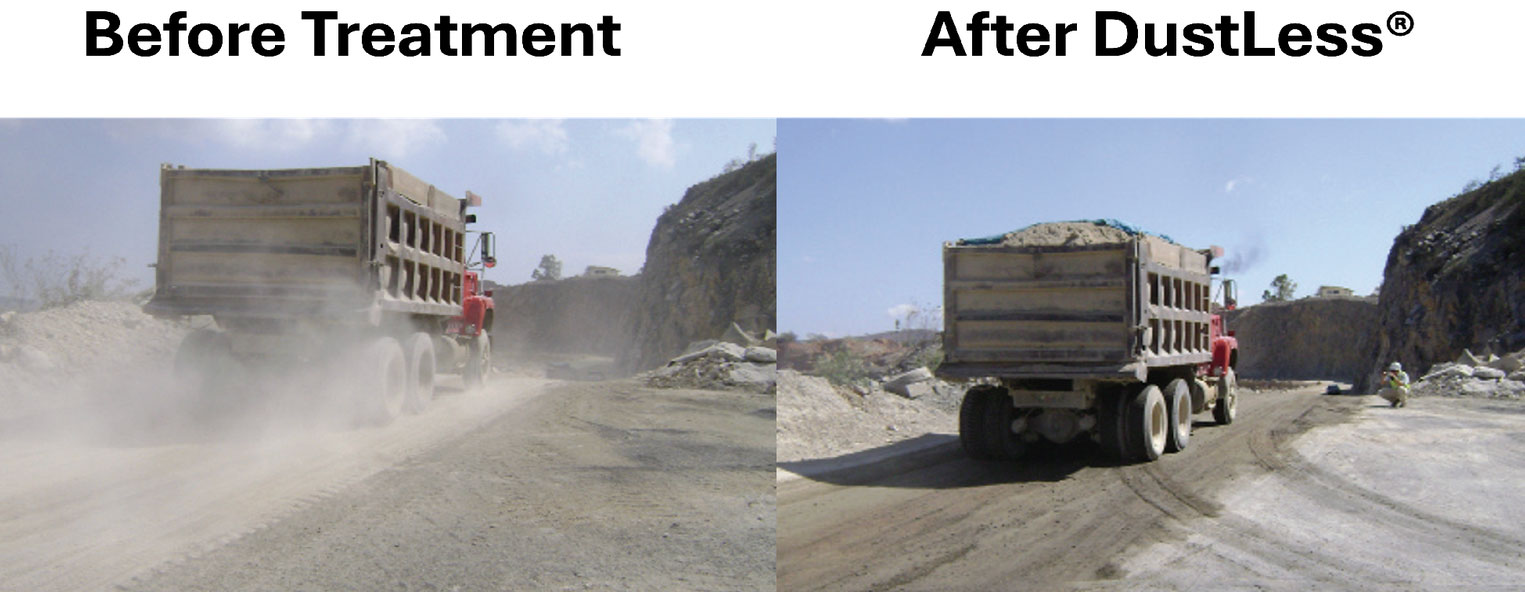
Global Environmental Solutions suite of dust control products were developed to control dust by stabilizing the surface rather than simply adding moisture. Following application, long-term dust suppressants penetrate the roadway or aggregate surface. In the case of DirtGlue® products, the suppressants bind fine particles together into a durable matrix. This stabilized surface resists traffic-induced dust generation while maintaining natural drainage characteristics. In the case of DustLess® products, the dust suppressant adds weight to fine particles, inhibiting their ability to become airborne.

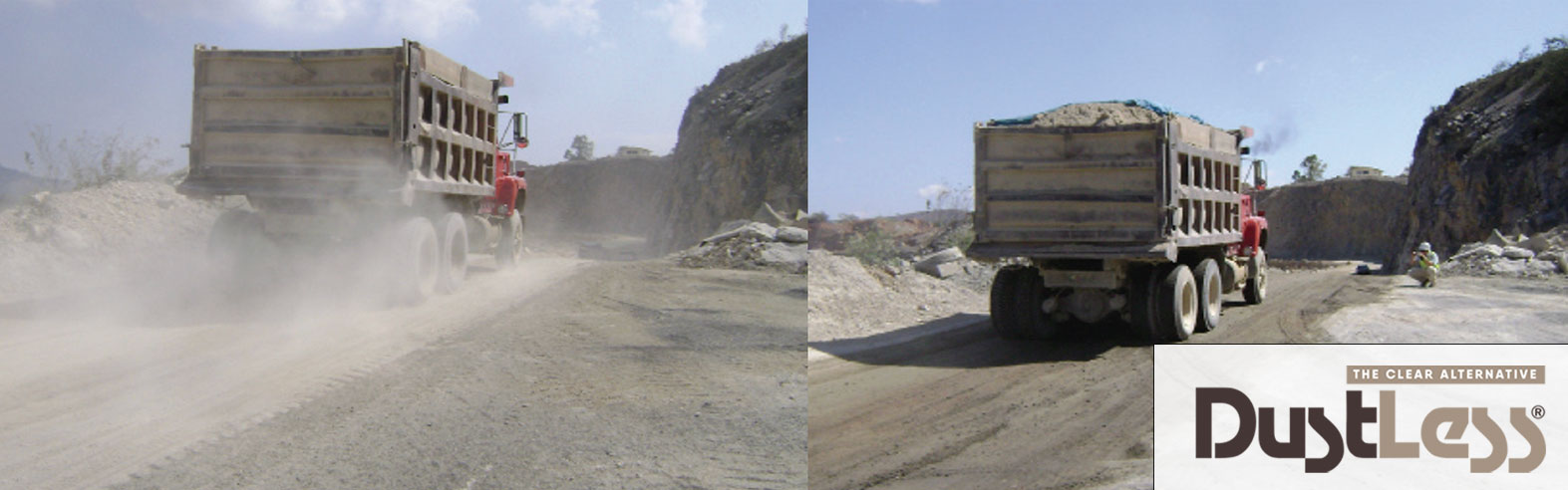
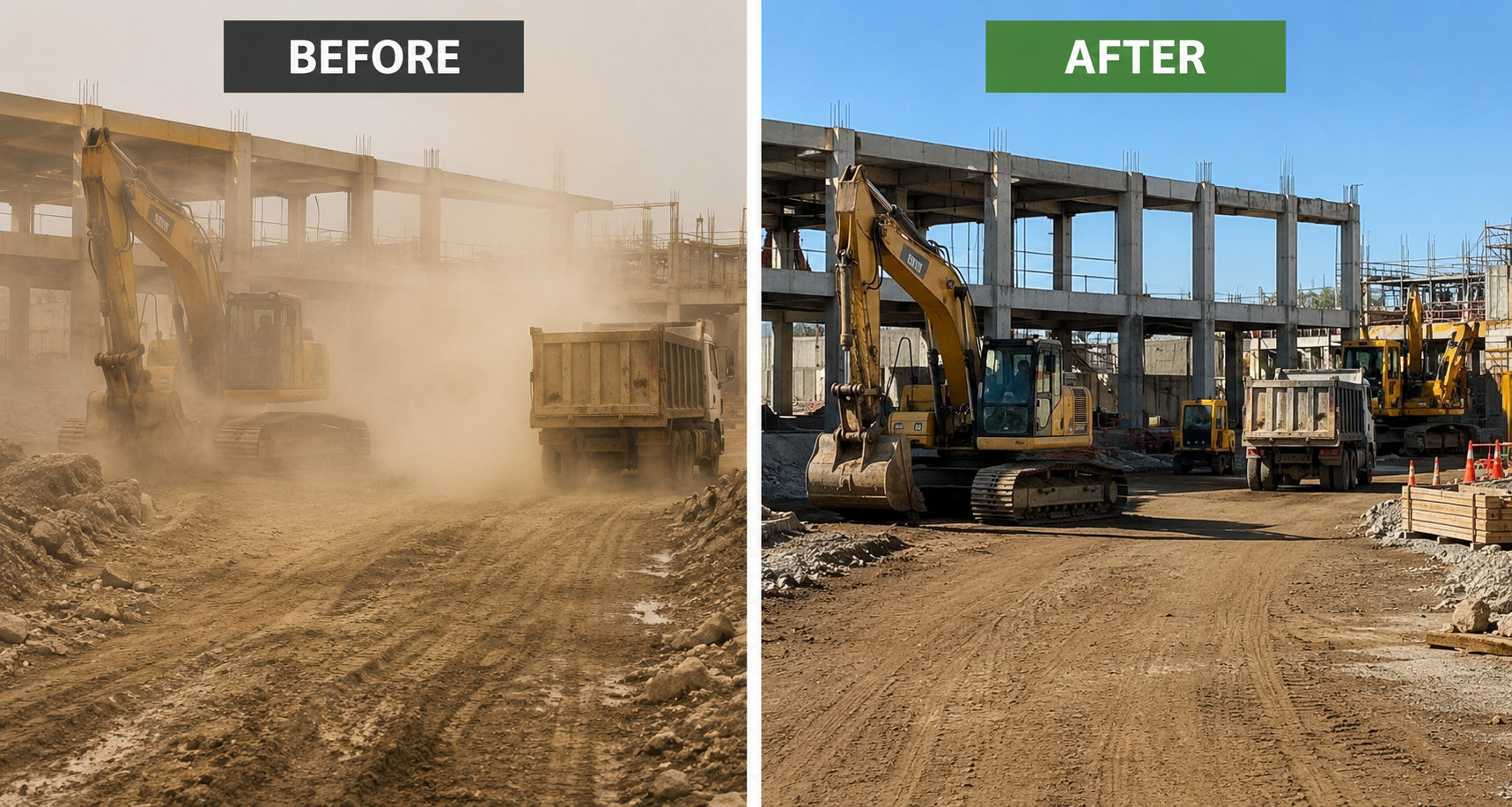
Figure 1. Before Treatment and after DustLess® Treatment at Industrial Facility.
 

Unlike water, DustLess® and DirtGlue® continues working long after application, providing extended dust suppression that is measured in months rather than hours.

Typical applications include:

  • Mine haul roads
  • Industrial facilities
  • Aggregate operations
  • Quarries
  • Construction sites
  • Dirt and gravel roads
  • Material storage yards
  • Heavy equipment travel lanes

In heavily trafficked surfaces, by dramatically reducing the frequency of reapplication, DustLess® lowers overall operating costs while improving roadway performance.

Dust Control Performance Over Time

The longevity of DustLess® depends on several site-specific variables, including:

  • Aggregate type
  • Soil gradation
  • Traffic volume
  • Vehicle weight
  • Climate
  • Application rate
  • Surface maintenance practices

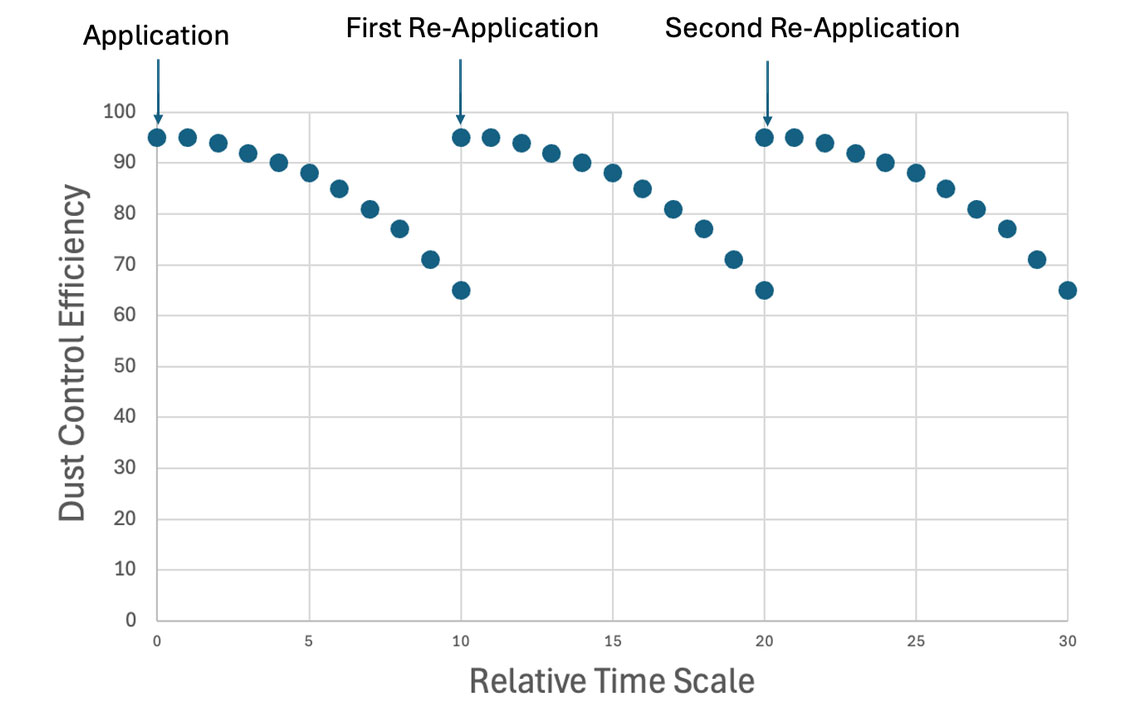
Immediately following application, DustLess® commonly achieves dust control efficiencies approaching 90–95%, depending on site conditions and application rate.

As traffic gradually abrades the treated surface, dust control efficiency slowly declines. Rather than experiencing the rapid loss of performance associated with water, DustLess® provides a gradual reduction in effectiveness over several months.

Under extremely demanding mining applications involving 100-ton haul trucks, reapplication may be required approximately every three months.

Under typical rural dirt and gravel road conditions, many users require reapplication only once every twelve months or longer.

Facilities generally choose to reapply DustLess® when visible dust begins to reappear, allowing maintenance activities to be planned proactively rather than reactively.

Figure 2. Relative Dust Control Efficiency versus Time

Table 1. DustLess® Performance based on Use Case

Application Rate Typical Service Life
Heavy Duty Mine Roads 2–6 months
Heavy Industrial Facilities 3–9 months
Agricultural Facilities 4–12 months
Moderate Passenger Vehicle 6–12+ months
Light Passenger Vehicles/          Rural Gravel Roads 10–12+ months


Residual Benefit of Repeated Applications

Field observations collected over more than twenty years indicate that DustLess® exhibits a cumulative benefit following repeated applications.

Once an aggregate surface has been treated multiple times, the roadway often requires lower application rates while maintaining longer performance intervals. Successive applications continue strengthening the treated surface, improving long-term dust suppression and reducing maintenance costs.

This cumulative benefit is reduced when large quantities of new, untreated aggregate are introduced, as fresh material has not previously received DustLess® treatment.


Comparing Total Cost of Ownership

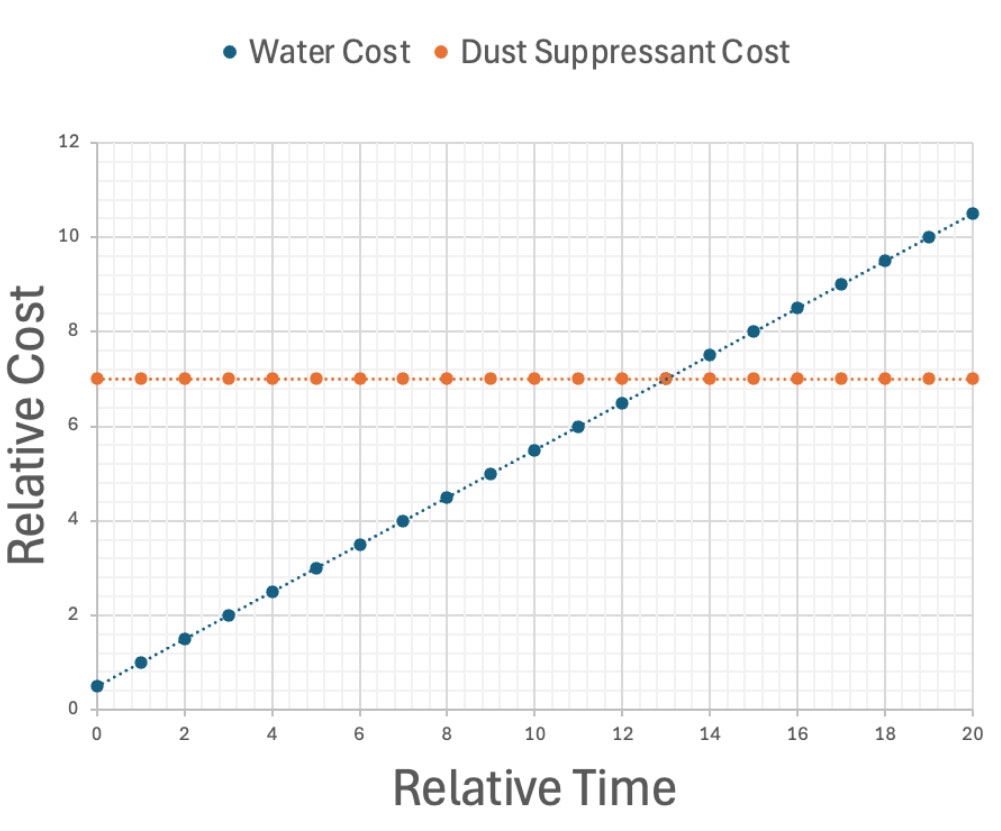
Although long-term dust suppressants require a greater initial investment than water alone, lifecycle economics strongly favor stabilized dust control systems.

Facilities implementing DustLess® commonly experience:

  • Reduced annual dust control costs
  • Lower labor requirements
  • Reduced fuel consumption
  • Less equipment wear
  • Lower water usage
  • Improved roadway durability
  • Better visibility and safer operating conditions
  • Reduced environmental complaints
  • More predictable maintenance schedules

Rather than repeatedly paying for temporary dust suppression, facilities invest in a treatment that continues providing value over an extended period.

Figure 3. Example Annual Dust Control Cost Comparison*

*In multiple case studies, long-term dust suppressants routinely save operators 20-50% in dust control costs, when utilizing a total cost analysis. 


Table 2. GES Dust Control Product Selection Guide

Product Primary Purpose Best Applications Typical Performance Relative Cost
DustLess® Long-term dust suppression Haul & mine roads, industrial yards, gravel roads, construction sites, aggregate facilities Dust control for months to a year without reapplication ++
DirtGlue® Soil stabilization and erosion control Slopes, embankments, stockpiles, unpaved areas, construction sites, erosion-prone soils Long-term soil stabilization with excellent erosion resistance, prevents wind-blown dust from non-trafficked areas ++
DirtGlue® Balance Dust Control with Roadway Stabilization Gravel roads, shoulders, parking areas, trails, equipment yards, aggregate surfaces requiring improved stability Reduces dust while increasing surface strength and resistance to rutting +


The Value of Total Cost of Ownership

Successful dust control is measured by more than the purchase price of the treatment.

The most economical solution is often the one that minimizes labor, equipment operation, maintenance, water use, and operational interruptions while consistently controlling dust.

Evaluating dust suppression through the lens of total cost of ownership enables facilities to make informed decisions that improve productivity, reduce maintenance costs, and support long-term environmental stewardship.

Return on Investment

Facilities implementing long-term dust suppression commonly report:

  • Lower annual dust control costs
  • Reduced labor requirements
  • Reduced fuel consumption
  • Lower equipment operating hours
  • Less roadway maintenance
  • Improved visibility and safety
  • Significant water conservation
  • Fewer environmental complaints
  • More predictable maintenance scheduling

Because application frequency is dramatically reduced, many facilities recover the initial investment through reduced operating costs over the life of the treatment.

Table 3. Six-month comparison between Water and DustLess®.

Six-Month Comparison Water DustLess®
Typical Applications 360 1
Labor Requirements Very High Low
Fuel Consumption Very High Low
Water Usage Very High Low
Equipment Operating Hours Very High Low
Dust Control Performance Variable Consistent
Visibility Conditions Variable Improved
Maintenance Requirements Daily Planned
Typical Service Duration Hours Months
Annual Operating Costs High Lower Total Cost
Roadway Performance Variable Reduced Maintenance


Conclusion

Every industrial facility has unique operating conditions, traffic volumes, aggregate characteristics, and environmental objectives. Selecting the proper dust control strategy requires balancing initial investment with long-term operating costs.

While water trucks continue to play a role in temporary or emergency dust suppression, facilities seeking to reduce annual operating expenses increasingly recognize the value of long-term dust suppression technologies. By reducing application frequency, conserving water, minimizing equipment operation, and improving roadway performance, DustLess®, DustLessBio™, DirtGlue®, and DirtGlue® Balance provide practical solutions that lower the total cost of dust control while supporting safer, more efficient operations.

By focusing on total cost of ownership rather than initial material cost, facility owners can implement dust control strategies that improve compliance and safety, reduce maintenance, conserve water, and lower operating costs for years to come. Ultimately, the most economical dust control strategy is the one that minimizes total operating costs while consistently meeting operational, environmental, and safety objectives.


Learn More

This paper focuses on the economics of dust control and lifecycle cost evaluation.

For additional information regarding dust generation, application rates, dust suppressant performance, and the engineering principles behind DustLess®, please contact us at customerservice@dirtglue.com to request the companion white paper:

DustLess® Technical Guidance for Fugitive Dust Control (2026).

DirtGlue® Landscaper Helper™ Now Available on Amazon

Professional Landscape Stabilization is Now Just a Click Away

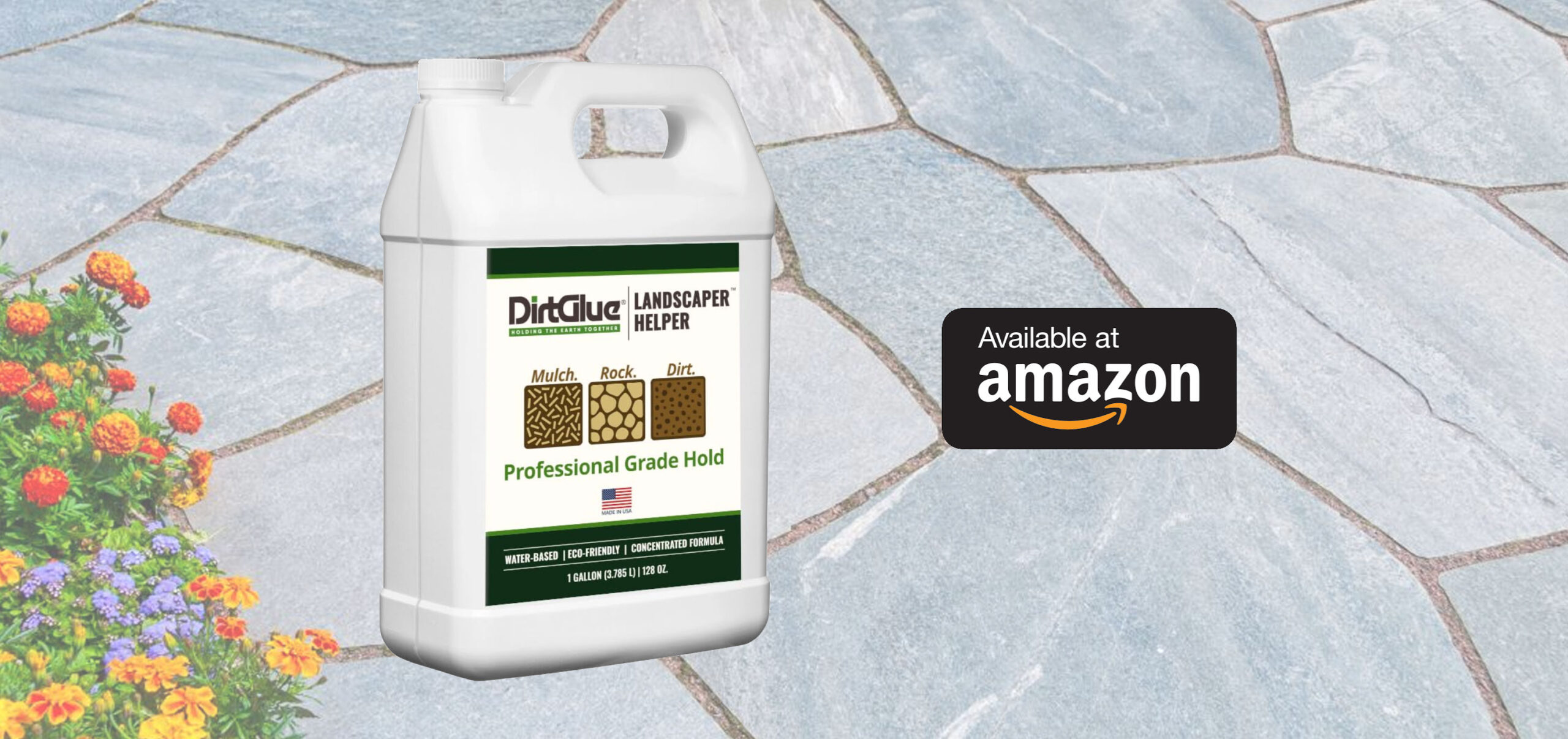
Global Environmental Solutions (GES) is proud to announce that DirtGlue® Landscaper Helper™ is now available on Amazon, making it easier than ever for homeowners, professional landscapers, contractors, and property managers to purchase professional-grade landscape stabilization with fast, convenient nationwide delivery.

Unlike many consumer landscape adhesives, DirtGlue® Landscaper Helper™ is built on over 25 years of proven DirtGlue® Stabilization Technology. For more than two decades, DirtGlue® products have been trusted on demanding environmental, infrastructure, construction, mining, and industrial projects where long-term surface stabilization and reliability matter most. Today, that same technology is available in a convenient product designed specifically for residential and commercial landscape applications.

DirtGlue® Landscaper Helper™ is an eco-friendly, water-based landscape binder engineered to help stabilize:

  • Mulch
  • Decorative stone
  • Gravel
  • Soil surfaces
  • Landscape beds
  • Garden pathways
  • High-traffic landscape areas

Once applied, DirtGlue® helps reduce material movement caused by wind, rain, irrigation, and everyday foot traffic while maintaining the natural appearance of your landscape. The result is a cleaner, longer-lasting landscape that requires less maintenance and fewer touch-ups throughout the season.

Whether you’re installing a new landscape, refreshing existing mulch, creating decorative rock features, or improving gravel walkways, DirtGlue® Landscaper Helper™ provides the professional performance trusted by contractors while remaining easy enough for homeowners to apply.

At GES, we believe beautiful landscapes deserve to last. Landscaper Helper™ was created to bring proven stabilization technology from large-scale professional projects directly to homes and businesses, helping protect your landscape investment while reducing maintenance over time.

Now Available on Amazon

amazon

Order DirtGlue® Landscaper Helper™ today and experience the difference that 25+ years of professional stabilization technology can make.

Learn more about DirtGlue® Landscaper Helper™ at:
https://globalenvironmentalsolutions.com/ges-products/dirtglue-landscaper-helper/