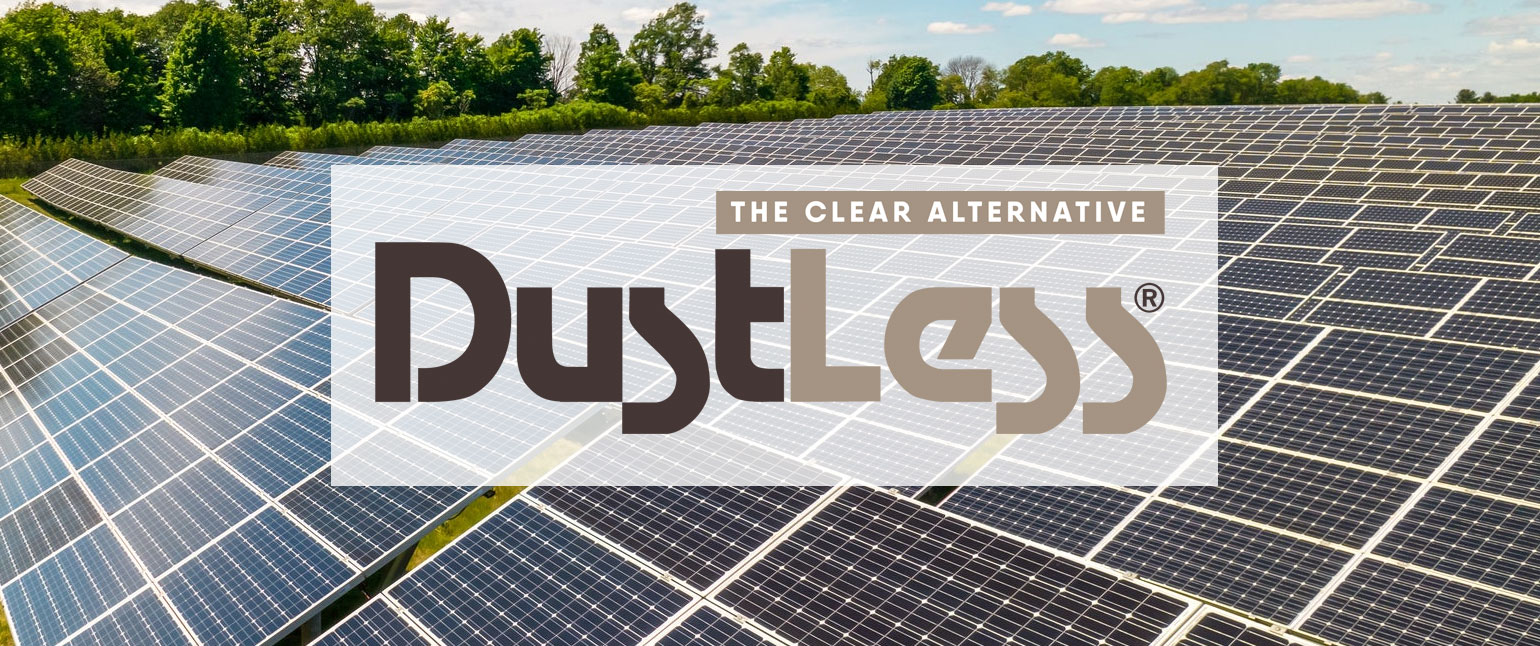
Dust Control for Solar Farms: Protecting Solar Projects During Construction and Operation

Dustless

Dust is an ongoing challenge throughout the life of a solar farm, not just during construction.

From site preparation and grading to decades of operations and maintenance (O&M), unpaved roads, equipment traffic, exposed soils, and dry weather can generate significant airborne dust. Left unmanaged, dust can reduce worker safety, increase maintenance costs, contribute to equipment wear, create concerns for neighboring properties, and contribute to panel soiling over time.

Whether you’re developing a new utility-scale solar project or managing an operating solar facility, an effective dust control strategy can help protect both project performance and long-term operating efficiency.

Why Dust Control Matters for Solar Farms

Utility-scale solar projects often span hundreds or even thousands of acres. Throughout construction and operation, maintenance vehicles, service trucks, mowers, and heavy equipment continually travel across unpaved roads and disturbed soil.

Without effective dust suppression, solar facilities may experience:

  • Reduced visibility for equipment operators
  • Increased wear on vehicles and maintenance equipment
  • Dust accumulation around electrical and mechanical equipment
  • Airborne dust generated from roads and exposed soils that may contribute to panel soiling over time
  • Soil erosion and degradation of access roads
  • Concerns from neighboring communities
  • Increased water use and operating costs associated with repeated dust suppression

An effective dust control program can help create safer jobsites, better-maintained access roads, and cleaner operating conditions throughout the life of the facility.

Dust Sources Throughout a Solar Farm’s Lifecycle

Dust generation begins during construction but often continues throughout the operational life of a solar farm.

Common sources include:

During Construction

  • Site grading
  • Clearing and earthwork
  • Access road construction
  • Trenching and cable installation
  • Material laydown yards
  • Heavy equipment traffic

During Operation

  • Maintenance vehicle traffic
  • O&M access roads
  • Inverter and transformer access roads
  • Vegetation management equipment
  • Emergency response vehicle access
  • Dry, exposed soils around the facility
  • Wind erosion on disturbed ground

Because many of these activities occur year after year, implementing a long-term dust control strategy can help reduce ongoing maintenance requirements.

Why Water Alone Isn’t a Long-Term Solution

Water trucks are commonly used for dust suppression, but their effectiveness is often temporary, particularly during hot, dry, or windy conditions.

Repeated watering may increase:

  • Water consumption
  • Fuel costs
  • Labor requirements
  • Equipment use
  • Scheduling complexity
  • Overall operating expenses

As moisture evaporates, dust can quickly return, sometimes in just a few hours.

Longer-lasting dust suppressants can reduce the need for continual watering while providing more consistent site conditions.

Dust Suppressants for Solar Farms

DirtGlue® and DustLess® help reduce airborne dust generated by traffic and wind.

Typical applications include:

  • Construction access roads
  • Permanent maintenance roads
  • Equipment staging areas
  • Laydown yards
  • Operations and maintenance facilities
  • Service entrances
  • High-traffic unpaved areas
  • Utility corridors

Depending on soil type, traffic, weather, and application rate, these treatments can provide longer-lasting dust suppression while helping reduce maintenance frequency and water use.

Benefits of Long-Term Dust Control

A well-designed dust control program can help solar developers and operators:

  • Improve worker safety
  • Reduce airborne dust
  • Help maintain unpaved access roads
  • Reduce water consumption
  • Lower fuel and labor requirements associated with repeated watering
  • Improve driving conditions
  • Help reduce dust accumulation on equipment
  • Support cleaner, more sustainable operations
  • Help reduce ongoing road maintenance requirements

Supporting Sustainable Solar Operations

Solar farms are built to deliver clean, renewable energy for decades. Dust control practices should support those same sustainability objectives.

Modern dust suppressants, like DirtGlue® and DustLess® can help reduce water use, minimize equipment emissions associated with frequent watering, lower maintenance requirements, and improve overall site conditions compared with repeated water-only applications.

For owners and operators, this can help reduce long-term operating and maintenance costs while supporting safer, cleaner facility operations.

Choosing the Right Dust Suppressant

When evaluating a dust control solution for a solar project, contractors and facility operators should consider:

  • Soil type
  • Climate
  • Traffic volume
  • Project duration
  • Water availability
  • Environmental compatibility
  • Ease of application
  • Long-term maintenance requirements

The best dust suppressant should provide reliable performance under site-specific conditions, be compatible with standard application equipment, and support the environmental goals of the project.

DustLess® for Solar Farms

DustLess® from Global Environmental Solutions is designed to provide effective dust suppression on unpaved roads, construction sites, maintenance roads, staging areas, and other high-traffic surfaces.

Depending on site conditions and application rates, DustLess® can help reduce airborne dust, lower water consumption, improve road conditions, and reduce ongoing maintenance requirements during both construction and long-term facility operation.

Frequently Asked Questions

How do you control dust on a solar farm?

Dust is commonly controlled using water trucks, DirtGlue® and DustLess® dust suppressants, stabilized access roads, and vegetation management. Dust suppressants can provide longer-lasting dust control than water alone in many applications.

Why is dust control important for solar farms?

Effective dust control can help improve worker visibility, reduce airborne particulate matter, maintain access roads, reduce water consumption, and support efficient construction and long-term facility operations.

Where is dust control most important on a solar farm?

The highest-priority areas typically include construction access roads, permanent maintenance roads, equipment staging areas, laydown yards, service entrances, inverter and transformer access roads, and other high-traffic unpaved surfaces.

Can dust suppressants be used during both construction and operation?

Yes. Many both DirtGlue® and DustLess® dust suppressants are suitable for both temporary construction areas and permanent maintenance roads when selected and applied appropriately for the site’s soil conditions, traffic levels, and environmental requirements.

Can dust affect solar panel performance?

Dust generated from roads and exposed soils can contribute to panel soiling over time. Solar facilities typically implement panel cleaning and routine maintenance programs, while effective dust control can help reduce airborne dust generated within the site.

Dust Control Is a Long-Term Investment

Dust control shouldn’t end when construction is complete.

As utility-scale solar development continues to expand, effective dust suppression is becoming an increasingly important part of protecting infrastructure, improving worker safety, reducing water use, and helping maintain efficient operations throughout the life of a solar facility.

By implementing a comprehensive dust control strategy from construction through long-term operation, developers and owners can help protect their investment while supporting cleaner, safer, and more sustainable renewable energy infrastructure.

For more than 25 years, Global Environmental Solutions has helped customers solve challenging dust control and soil stabilization problems across infrastructure, environmental, industrial, and construction applications. Our DirtGlue® and DustLess® dust suppression technology is designed to help organizations manage dust more effectively while supporting safer, cleaner, and more sustainable operations.
Shade Balls for Reservoirs: Reduce Evaporation, Improve Water Quality & Protect Infrastructure

water coverage

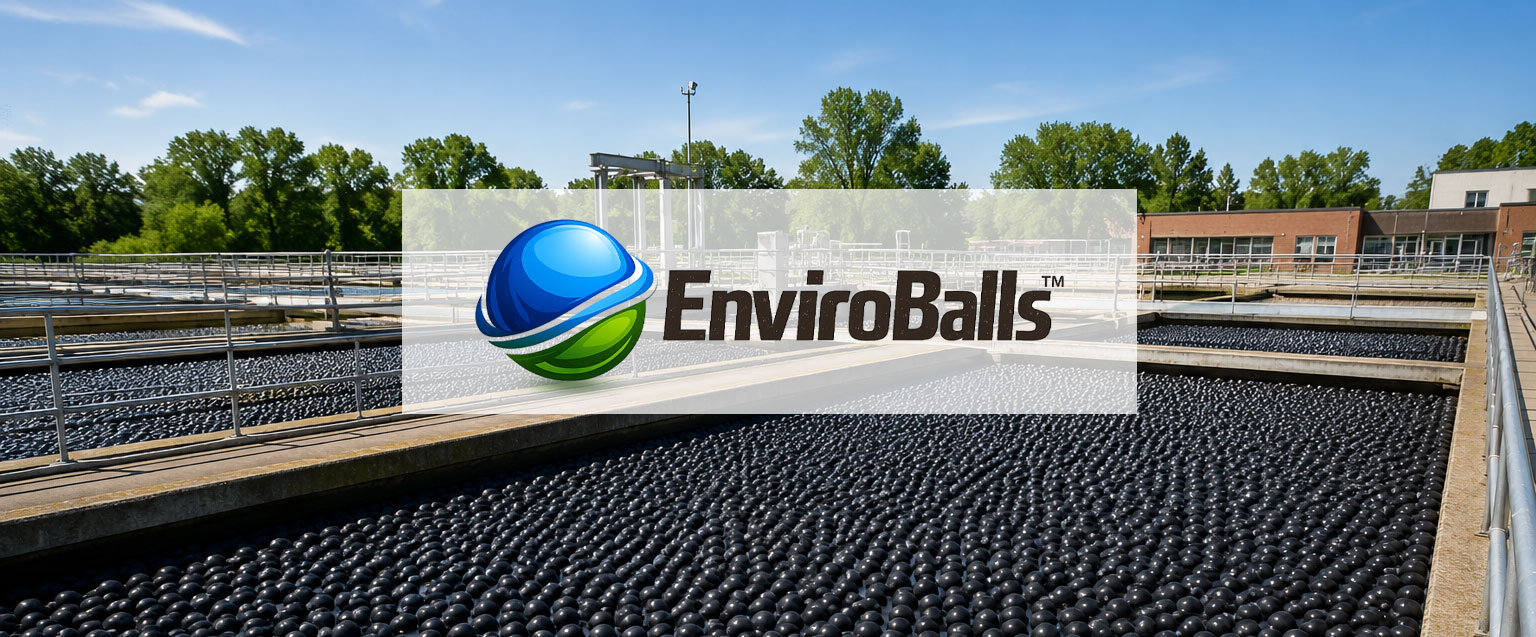
Floating shade balls for reservoirs are engineered HDPE water covers designed to reduce evaporation, help maintain water quality, reduce sunlight exposure that can contribute to algae growth, and protect reservoir infrastructure from UV-light exposure. These floating shade ball systems are used in drinking water reservoirs, industrial ponds, wastewater lagoons, and agricultural water storage.

As drought conditions and water scarcity intensify across the United States, municipalities, industrial operators, utilities, and agricultural facilities are increasingly turning to engineered floating cover systems. Among the most widely evaluated technologies are shade balls for reservoirs, also known as floating shade balls, reservoir balls, reservoir shade balls, modular floating covers, evaporation control systems, or floating HDPE ball covers.

Global Environmental Solutions (GES) offers EnviroBalls™, engineered floating cover systems designed for reservoirs, ponds, lagoons, industrial basins, and water storage infrastructure throughout North America.

What Are Floating Shade Balls and How Do They Protect Reservoirs?

Shade balls are hollow, UV-stabilized HDPE (high-density polyethylene) floating spheres that form a modular cover across the surface of stored water. Deployed at scale, they create a protective barrier that reduces sunlight penetration, minimizes evaporation, suppresses algae growth, deters wildlife, and reduces chemical consumption.

Unlike fixed membrane covers or rigid structures, modular floating ball systems conform naturally to fluctuating water levels and irregular basin shapes.

Common applications include:

  • Potable water reservoirs
  • Stormwater retention ponds
  • Wastewater lagoons
  • Mining and industrial process ponds
  • Agricultural water storage
  • Airport and wildlife management ponds
  • Chemical and industrial basins

Why Reservoir Operators Choose Floating Shade Ball Systems

1. Evaporation Reduction

Reducing evaporative water loss is the leading reason facilities deploy shade balls for reservoirs. Open reservoirs lose substantial volume due to solar radiation, wind exposure, high ambient temperatures, and low humidity. Modular floating covers limit direct solar exposure and surface energy transfer, and even modest evaporation reductions translate into significant operational savings for facilities storing millions of gallons. Evaporation reduction can be a critical factor when considering reservoir shade balls or floating water covers.

2. Algae Suppression and Improved Water Quality

Sunlight drives algae growth in open water systems. By blocking UV and visible light, floating shade balls suppress photosynthetic activity in the water column, reducing algae formation, lowering chemical demand, improving water quality stability, and decreasing maintenance frequency. This benefit is critical for potable water reservoirs, industrial process water, stormwater systems, and agricultural irrigation storage.

3. Bromate Formation Mitigation

In ozone-based water treatment systems, sunlight exposure can contribute to bromate formation at the water surface. Floating shade ball covers help limit UV-driven reactions, which is one reason municipalities and utilities have deployed this technology in large reservoir applications.

4. Wildlife and Bird Deterrence

Open reservoirs attract birds and wildlife, introducing contaminants and creating operational challenges. Floating covers reduce available landing surface, discourage wildlife congregation, and improve sanitary conditions. Facilities near airports, where bird activity poses aviation safety risks, have found floating ball systems particularly effective for wildlife management.

5. Modular, Scalable Installation

Unlike permanent rigid cover systems, modular shade ball covers require minimal infrastructure modifications. EnviroBalls™ install quickly, scale to any basin size, adapt to irregular geometry, and accommodate fluctuating water levels, making them suitable for both temporary applications and long-term reservoir protection.

Why HDPE Is the Material of Choice for Shade Balls

Most engineered shade balls are manufactured from UV-stabilized HDPE for its chemical resistance, impact durability, UV performance, environmental stress crack resistance, and long service life. Black UV-stabilized HDPE is the standard specification because it provides maximum UV absorption and proven outdoor durability in demanding environments.

Key Specifications to Evaluate When Sourcing Shade Balls

UV Stabilization

UV exposure is the most critical durability factor for outdoor floating systems. Resin selection and carbon black loading significantly affect long-term performance. Request documented UV stabilization data from any supplier.

Material Quality

Evaluate virgin resin vs. recycled content, wall thickness consistency, impact resistance, and manufacturing quality controls.

Regulatory Compliance

Depending on the application, facilities should assess NSF/ANSI 61 compliance, FDA resin standards, drinking water compatibility, and Buy America or domestic manufacturing requirements.

EnviroBalls™ Reservoir Cover vs. Traditional Fixed Reservoir Covers

Feature EnviroBalls™ Fixed Membrane Covers
Modular Yes Limited
Adapts to water levels Yes Often limited
Retrofit-friendly Yes Sometimes
Structural support required Minimal Higher
Expandable Yes Limited
Installation complexity Moderate Often high
Maintenance access Flexible Can be restricted

The right solution depends on reservoir geometry, climate, water chemistry, regulatory requirements, budget, and operational goals.

Industries Using Reservoir Shade Balls

Floating shade ball systems are actively evaluated across municipal water utilities, wastewater treatment facilities, mining operations, agriculture and irrigation, power generation, industrial manufacturing, airports and aviation facilities, HOAs and golf courses, and stormwater management operators.

EnviroBalls™ by Global Environmental Solutions (GES)

EnviroBalls™ are engineered modular floating cover systems built for demanding reservoir and industrial applications. GES supports customers with layout calculations, surface coverage estimates, site-specific evaluations, and full engineering support for commercial and municipal projects.

Applications include:

  • Water conservation and evaporation reduction
  • Algae suppression
  • Wildlife deterrence
  • Industrial basin covers
  • Acid mist suppression
  • Stormwater management

Frequently Asked Questions About Shade Balls for Reservoirs

How many shade balls does a reservoir need?

Coverage requirements depend on basin surface area and the desired level of shading. GES provides site-specific layout calculations and coverage estimates based on your facility’s dimensions.

Are shade balls safe for drinking water reservoirs?

EnviroBalls™ are engineered to support drinking water compatibility requirements. Contact GES to discuss your specific regulatory needs.

Why Choose EnviroBalls™ Floating Water Covers?

EnviroBalls™ are designed for long-term outdoor performance, with Engineered UV-resistant HDPE construction. Offering a simple installation with no structural cover system, EnviroBalls™ are scalable for reservoirs of any size. Technical support backed by GES’s expertise in water conservation.

What are the Best Uses and Applications of Floating Shade Ball Systems? Drinking water reservoirs, Industrial process water ponds, Wastewater lagoons, Agricultural irrigation ponds, Agricultural water storage, livestock and ranch water storage, Mining water storage, Stormwater ponds, Fire water storage, fire protection water ponds, water storage, and drinking water storage all can benefit from floating shade ball systems. 

The Future of Floating Reservoir Cover Systems

Water scarcity, drought management, infrastructure resilience, and environmental compliance demands are all growing. For facilities weighing evaporation control, water quality improvement, and long-term operational flexibility, floating shade balls are one of the most practical and cost-effective tools available today.


Contact Global Environmental Solutions (GES) to learn more about EnviroBalls™ floating reservoir cover systems.

GES supports municipalities, industrial operators, utilities, and infrastructure projects throughout the United States. Get started now.

Bird Balls for Airport Wildlife Hazard Management

Airport

Floating Surface Covers for Airport Stormwater Ponds, Detention Basins, and Open Water Features

A technical overview for airport operations managers, wildlife hazard coordinators, environmental engineers, and stormwater professionals evaluating floating surface covers (“bird balls” or “shade balls”) for airport water infrastructure.

What Are Bird Balls?

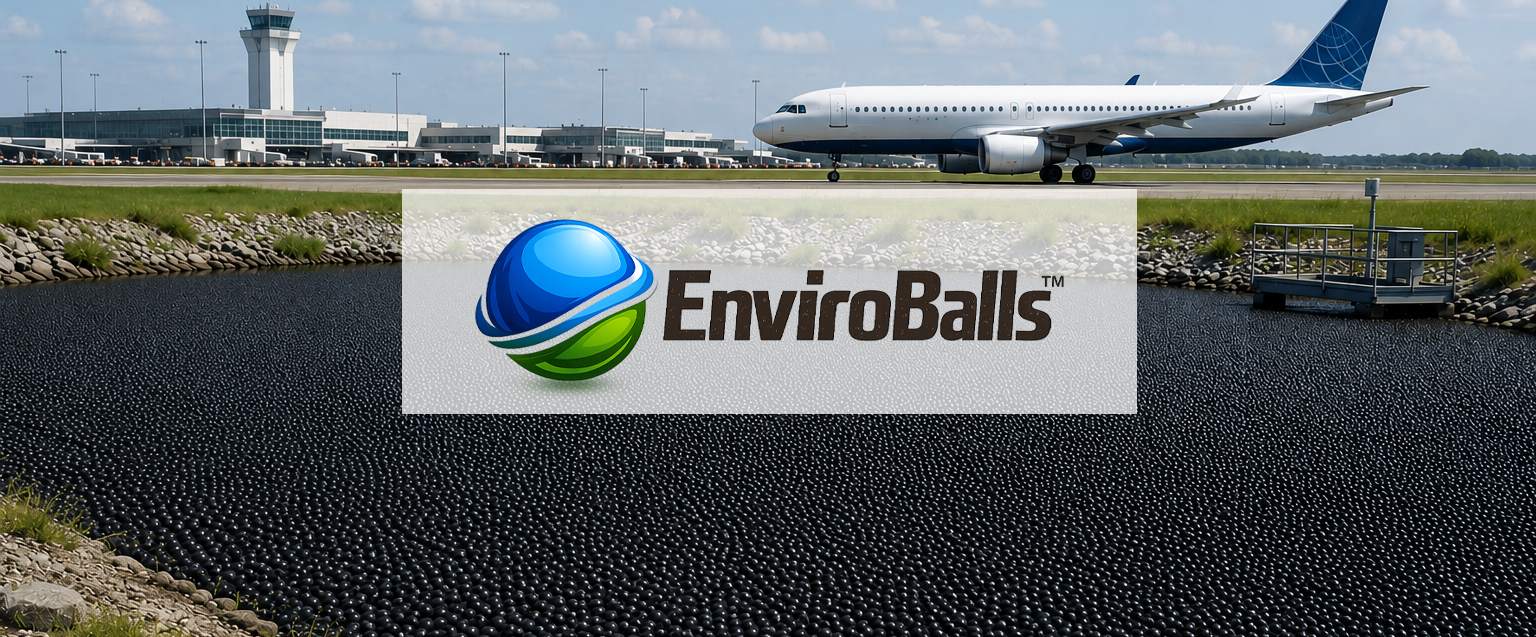
Bird balls, also called floating surface covers, shade balls, or floating pond balls, are modular floating HDPE spheres deployed on open water surfaces such as stormwater detention basins, retention ponds, reservoirs, and industrial water systems.

Airport operators and environmental engineers may evaluate bird balls as one component of broader airport wildlife hazard management and bird strike risk reduction strategies. Floating surface covers are designed to reduce visible open-water surface area, which may help reduce the attractiveness of certain water bodies to waterfowl and gull species associated with aircraft wildlife strike risk.

In addition to wildlife hazard reduction objectives, floating surface covers may also provide secondary operational benefits, including evaporation reduction and reduced sunlight penetration into water bodies.

Why Open Water Is a Wildlife Hazard Concern at Airports

Open water located on or near airport property can attract birds, including waterfowl, gulls, wading birds, and migratory species. Stormwater detention ponds, retention basins, drainage channels, wetlands, and temporary standing water areas may create feeding, loafing, or resting habitat near aircraft operational areas.

According to the FAA National Wildlife Strike Database, more than 19,600 wildlife strikes were reported at U.S. airports during 2023, and over 22,300 in 2024. The annual cost of wildlife strikes to the US Civil Aviation industry estimated to be over 74,000 hours of aircraft downtime and $473 million in direct or other monetary losses, in 2024 alone1. FAA wildlife strike data also indicates that waterfowl species account for a disproportionately high percentage of damaging strike events relative to their percentage of total reported wildlife strikes.

Because of these risks, airport wildlife hazard management programs frequently evaluate methods intended to reduce wildlife attractants associated with airfield stormwater infrastructure and nearby water bodies.

FAA Guidance on Water Bodies Near Airports

FAA Advisory Circular (AC) 150/5200-33C, Hazardous Wildlife Attractants On or Near Airports, discusses wildlife attractants associated with airport operations, including open water features and stormwater infrastructure.

For airports serving turbine-powered aircraft, FAA guidance recommends maintaining separation distances between certain wildlife attractants and airport operational areas. Where water bodies cannot reasonably be eliminated or relocated, airport operators may evaluate operational and engineering measures intended to reduce wildlife attraction associated with open water conditions. Specific to stormwater, it is detailed in the advisory circular that physical barriers, such as bird balls, are mentioned as one method of wildlife deterrence for both new and existing stormwater facilities.

Airports should evaluate all wildlife hazard mitigation measures in coordination with qualified wildlife hazard management professionals, airport operations personnel, and applicable FAA guidance documents.

How Bird Balls May Reduce Wildlife Attraction

Bird balls work by covering a substantial portion of the visible water surface. Reducing visible open-water area may reduce the visual characteristics that attract certain bird species to ponds and detention basins.

Unlike fixed overhead systems, floating surface covers rise and fall with changing water levels; adapt to stormwater fluctuations; require minimal structural infrastructure; may allow continued access to pumps and basin structures; and can be deployed on irregular basin geometries.

Because floating sphere systems are passive and modular, airport operators may evaluate them for both temporary and long-term stormwater management applications.

Why Airports Evaluate Bird Balls

Airport operations teams, stormwater engineers, and wildlife hazard coordinators may evaluate bird balls because floating surface covers can:

  • Reduce visible open-water surface area
  • Function as passive wildlife hazard reduction systems
  • Adapt to fluctuating stormwater levels
  • Avoid large overhead support structures
  • Require minimal fixed infrastructure
  • Be deployed on existing detention basins
  • Support broader airport wildlife hazard management strategies

Bird balls are often evaluated alongside other airport bird deterrent and wildlife hazard management measures, including habitat modification, vegetation management, and stormwater BMPs.

Bird Balls vs. Overhead Netting for Airport Ponds

Airport engineers and wildlife hazard managers commonly compare floating pond covers (“bird balls”) with overhead pond netting systems when evaluating airport stormwater wildlife mitigation strategies.

Engineering Factor Bird Balls / Floating Surface Covers Overhead Netting
Primary mechanism Reduces visible open-water area Physical barrier above water
Water level adaptation Self-adjusting with water elevation Fixed installation geometry
Structural support requirements Minimal in many applications Poles/cable systems typically required
Access to basin infrastructure Modular access around equipment Access openings or repairs may be required
Suitability for irregular basins Adaptable to many basin layouts Site-specific structural design required
Sunlight reduction Can reduce sunlight penetration Limited shading effect
Maintenance considerations Individual spheres replaceable Net repair/replacement may be required


The suitability of bird balls versus pond netting depends on site-specific engineering, wildlife pressure, maintenance priorities, and airport operational requirements.

Common Airport Applications for Bird Balls

Airport operators may evaluate floating surface covers for the following use cases.

Airport Stormwater Detention Basins

Stormwater detention ponds located within airport operational areas or wildlife hazard separation distances.

Airport Retention Ponds

Permanent retention ponds associated with airport drainage systems and environmental compliance infrastructure.

Fire Suppression Water Reservoirs

Open emergency water storage systems located near airport operational areas.

Drainage Channels and Ponding Areas

Localized standing-water areas within airport drainage systems.

Off-Airport Water Bodies Near Airports

Municipal ponds, industrial basins, and stormwater systems located within FAA wildlife hazard separation distances.

Temporary Construction Water Basins

Temporary stormwater management infrastructure associated with airport construction projects.

Engineering Characteristics of Floating Surface Covers

Typical floating surface cover systems (“bird balls” or “shade balls”) utilize UV-stabilized HDPE spheres designed for long-term outdoor exposure.

Typical Engineering Characteristics

  • UV-stabilized HDPE construction
  • Modular floating sphere design
  • Passive deployment
  • Adaptable to fluctuating water elevations
  • Compatible with any stormwater basin geometries
  • Minimal permanent infrastructure requirements
  • Replaceable modular components

EnviroBalls™ floating surface covers are manufactured in the United States for stormwater, industrial, and water surface management applications.

For federally funded infrastructure projects, U.S. manufacturing may support Buy America procurement requirements, subject to project-specific compliance review.


Airport Wildlife Hazard Management Considerations

Wildlife hazard conditions vary substantially depending on:

  • Airport operations
  • Bird species pressure
  • Migration patterns
  • Local habitat conditions
  • Stormwater configuration
  • Basin geometry
  • Climate and seasonality
  • Surrounding land use

Bird balls and floating surface covers should be evaluated as one component of a broader airport wildlife hazard management strategy and are not represented as a standalone solution for wildlife strike prevention or FAA regulatory compliance.

Airport operators should coordinate wildlife hazard mitigation activities with qualified wildlife biologists, airport operations personnel, environmental engineers, and applicable FAA guidance documents.

Frequently Asked Questions About Bird Balls at Airports

What are bird balls?

Bird balls are floating HDPE spheres used to cover open water surfaces such as stormwater ponds, detention basins, and reservoirs. They are also called floating surface covers, shade balls, or floating pond covers.

Are bird balls used at airports?

Airport operators may evaluate bird balls for stormwater ponds, detention basins, and other water infrastructure as part of broader wildlife hazard management programs.

Do bird balls prevent birds?

Bird balls are intended to reduce visible open-water surface area, which may reduce the attractiveness of certain water bodies to some bird species. Wildlife responses vary by species, habitat conditions, and site-specific factors.

Are bird balls FAA approved?

Bird balls are not specifically approved or certified by the FAA. Airports should evaluate wildlife hazard mitigation measures in coordination with qualified wildlife hazard professionals and applicable FAA guidance.

What is the difference between bird balls and pond netting?

Bird balls float directly on the water surface and adapt to changing water levels, while pond netting creates a physical barrier above the water surface using support structures and tension systems.

What types of airport ponds can use bird balls?

Potential applications include stormwater detention basins, retention ponds, fire suppression reservoirs, drainage ponding areas, and temporary construction water basins.

Technical Support and Project Assistance

GES provides project assistance and technical support for floating surface cover applications, including: Surface coverage calculations, Preliminary layout concepts, Product technical information, budget support, and additional project assistance by request.

Support is available for airport stormwater systems, detention basins, industrial ponds, reservoirs, and other open water infrastructure applications. Contact GES today to get started.


1For more information, review “Wildlife Strikes to Civil Aircraft in the United States, 1990-2024”, Federal Aviation Administration, National Wildlife Strike Database, Serial Report Number 31, June 2025.

Bird Balls for Reservoir and Water Infrastructure Wildlife Control

bird deterrent

A guide for water utilities, reservoir operators, and environmental engineers managing bird and wildlife activity on open water storage.

Why birds on reservoirs can be a compliance risk, not just a nuisance

Birds are drawn naturally to open water. For drinking water reservoirs, that can introduce a potential contamination pathway. When waterfowl roost and feed on a reservoir, they may introduce indicator bacteria such as fecal coliform bacteria, E. coli, along with other pathogens, directly into the source water.

Under the U.S. EPA’s Surface Water Treatment Rule and the Revised Total Coliform Rule (RTCR), utilities are required to monitor water quality and respond to detections of indicator organisms. While bird activity alone does not constitute a violation, it can contribute to water quality impacts that trigger Level 1 or Level 2 assessments, corrective actions, or increased scrutiny during sanitary surveys.

The relationship between waterfowl activity and reservoir water quality has been documented in multiple studies. For example, research at New York City’s Kensico Reservoir found that fecal coliform concentrations became significantly elevated during autumn and winter roosting periods for ring-billed gulls and Canada geese. Laboratory analysis showed that gull feces carry an average fecal coliform concentration on the order of 10⁸ CFU/g (colony-forming units per gram). Once the NYC Department of Environmental Protection implemented a formal waterfowl mitigation program, fecal coliform counts at the reservoir decreased measurably.

For utilities operating surface water systems, bird activity near reservoirs and intake structures is best understood as a manageable risk within a broader watershed control strategy.

How bird balls work as a wildlife deterrent

Bird balls are hollow HDPE spheres deployed across the water surface in sufficient density to form a floating layer. Their effectiveness is based on visual disruption as many waterfowl recognize open water visually. A surface covered by floating spheres no longer appears as water to waterfowl, making it less attractive as a landing, roosting, or feeding site. The birds move on.

Unlike netting or wire deterrent systems, bird balls do not create an overhead barrier above the water. Instead, they camouflage the water surface, allowing the system to self-adjust to water level changes; do not obstruct access to pumps, intake structures, or aeration equipment; and require no overhead infrastructure.

In addition to the bird deterrence, the floating layer also delivers secondary operational benefits by blocking sunlight, the floating layer can help limit algae growth and reduce evaporation, two problems that bird netting may not address.

Bird balls vs. pond netting

Water utilities often compare bird balls with pond netting when evaluating wildlife deterrence options. Both are passive systems that require no power and minimal ongoing management, but they differ in meaningful ways.

Factor Bird balls Pond netting


Installation ✓ Deploy directly onto water, no infrastructure Requires scaffolding or frame above water
Water level changes ✓ Self-adjusting, balls rise and fall with level Fixed installation, does not adjust
Equipment access ✓ Balls move aside for pumps, intakes, aerators Net must be cut or removed for access
Algae control ✓ Blocks sunlight, helps reduce algae growth No sunlight blocking, algae can still grow
Evaporation reduction ✓ Reduces evaporation as secondary benefit No evaporation benefit
Wildlife deterrence ✓ Surface camouflage deters attraction to water Physical barrier, does not camouflage water
Maintenance ✓ Replace individual balls as needed Repair or replace net sections when damaged


Pond netting remains appropriate in certain applications, particularly where physical exclusion of all wildlife is the objective. Bird balls offer greater operational flexibility and may deliver additional water quality benefits beyond netting.

Regulatory context: what utilities should consider

Surface water systems are required to evaluate and manage potential contamination pathways as part of watershed control and sanitary survey processes. Bird and wildlife activity is commonly recognized in practice as a potential contamination pathway.

During sanitary surveys, state primacy agencies assess watershed control programs, including how utilities identify and manage sources of contamination. Reservoirs with documented wildlife activity but no mitigation strategy may be noted during sanitary surveys, while systems with documented control measures can demonstrate proactive risk management.

Under the RTCR, total coliform or E. Coli detections require utilities to perform assessments to identify potential causes and implement corrective actions where needed. If bird activity is identified as a contributing factor, mitigation measures may be incorporated into the utility’s response.

Bird balls can serve as a passive, physical control measure that reduces wildlife access to the water surface. When used as part of a broader management approach, they can support documentation of actions taken to address identified risks.

Applications beyond drinking water reservoirs

Wastewater and stormwater facilities

Wastewater treatment lagoons and stormwater retention ponds attract the same species of birds as water reservoirs. Bird balls can be used as a wildlife deterrent in both applications without requiring additional infrastructure.

Mining and industrial process water

Open process water ponds in mining and industrial applications attract birds, which creates concerns with potential wildlife exposure risk water may contain tailings or chemicals. Wildlife ingestion of tailings water and chemical laden water may lead to wildlife exposure and, in some cases, fatalities. A covered pond surface removes the visual attractant that draws birds and wildlife, reducing the potential for wildlife exposure.

Recycled water storage

Recycled water storage facilities operate under water quality requirements for reuse applications. Bird activity introduces contamination that can cause unwanted water quality changes. Bird balls provide passive, continuous deterrence without requiring active management.

EnviroBalls™ for reservoir wildlife control

EnviroBalls™ are manufactured in the United States from UV-stabilized HDPE, designed for long-term deployment on drinking water reservoirs, lagoons, and industrial basins. Each EnviroBall™ is a hollow sphere that floats naturally on the water surface, self-organizes into a continuous protective layer and adjusts with changing water levels.

For utilities and infrastructure operators, U.S. manufacturing ensures compliance with Buy America requirements. If you are managing bird or wildlife activity on a reservoir, lagoon, or industrial water basin, contact the GES team to discuss the right configuration for your facility.

Request Information on EnviroBalls™

GES provides coverage calculations, product sizing, and project cost estimates for reservoir wildlife control applications. Contact Global Environmental Solutions to get started. 

GES Introduces EnviroBalls™ Floating Water Cover System for Reservoirs, Wastewater, Bird Deterrence, and Evaporation Control

enviroballs

Global Environmental Solutions, LLC (GES) is pleased to announce the launch of EnviroBalls™, a line of engineered floating water cover systems built for water utilities, industrial operators, and aviation facility managers. Made in the USA from UV-stabilized HDPE, EnviroBalls™ reduce evaporation loss, emissions, and water quality degradation from open water systems, issues that represent significant and often under-addressed operational costs for utilities and industrial operators. EnviroBalls™ are practical, durable, and easily deployable to support infrastructure operators.

What Are EnviroBalls™?

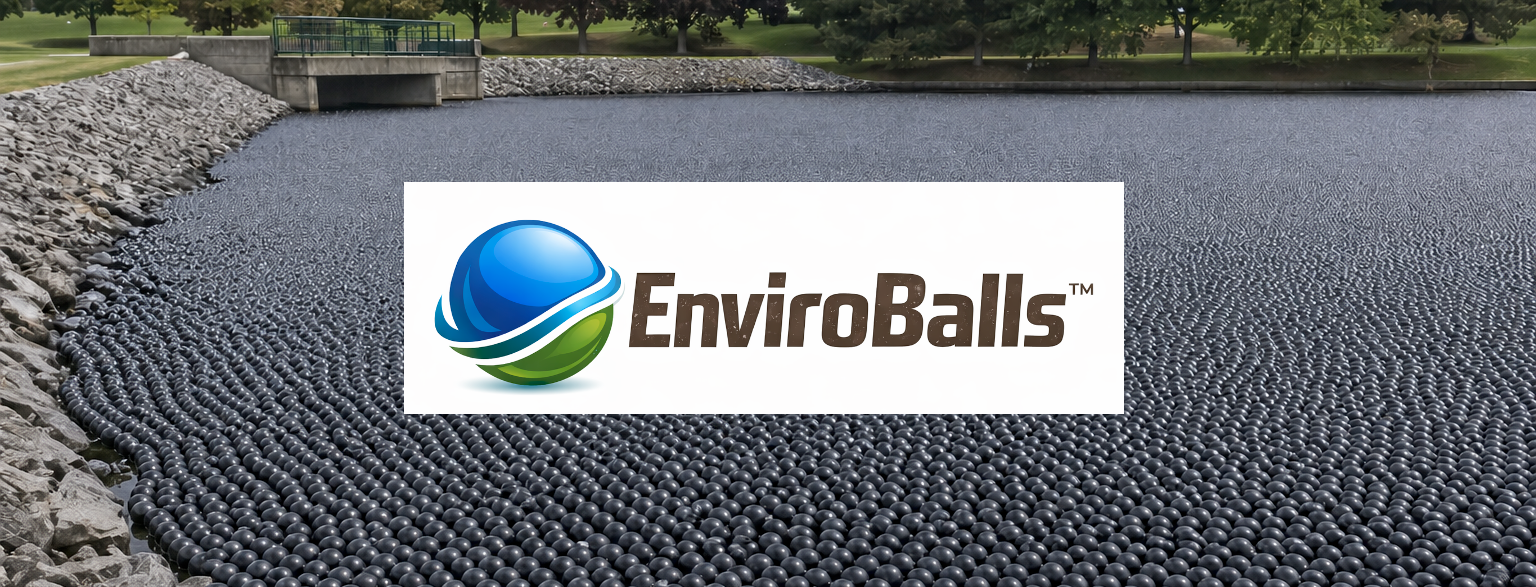
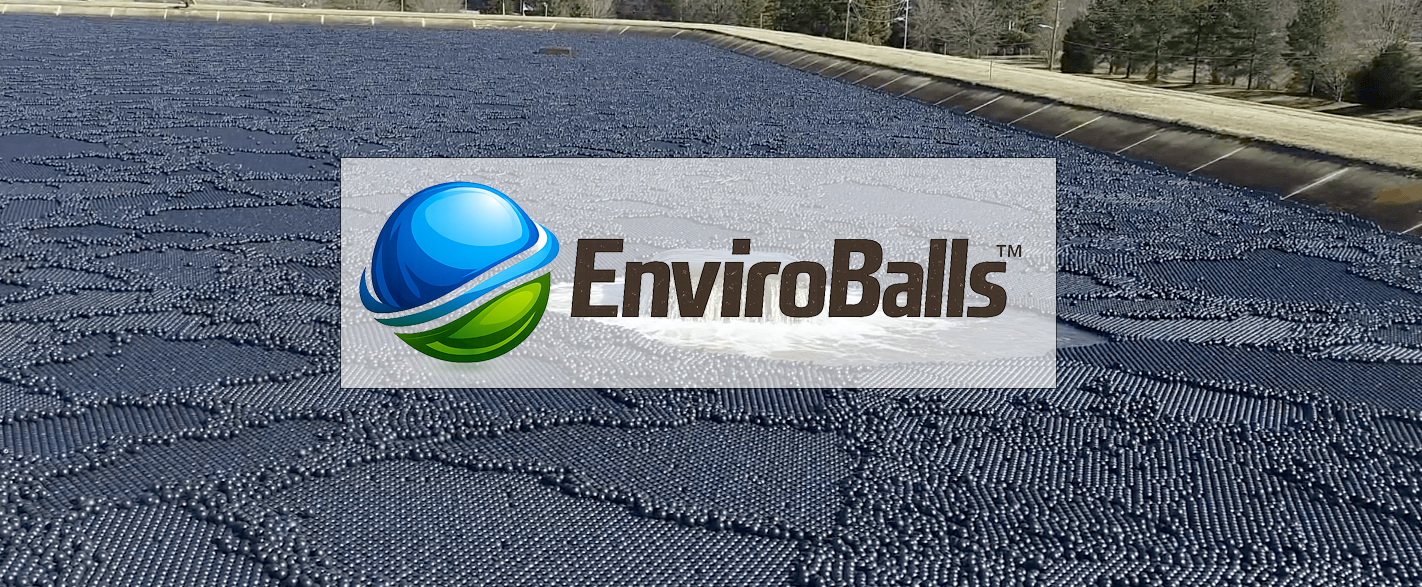
Sometimes referred to as shade balls, bird balls, or evaporation control balls, EnviroBalls™ are hollow, spherical floating cover balls made from UV-stabilized high-density polyethylene (HDPE) for managing open water systems. EnviroBalls™ form a continuous, self-adjusting surface barrier that floats freely on the water surface, reducing evaporation, blocking UV radiation, limiting chemical off-gassing, and keeping wildlife away. EnviroBalls™ are designed as a modular, rapidly deployable alternative to fixed cover systems that require anchoring, framing, and structural support. At full deployment, EnviroBalls™ form a near-continuous floating layer, with individual spheres naturally forming a dense packing arrangement that minimizes exposed water surface.

That flexibility is a big part of their appeal. Coverage can be added in phases as budgets allow, adjusted as conditions change, and deployed quickly without the lead times that come with custom rigid covers. Across reservoirs, industrial tanks, and airport stormwater ponds, the result is consistent, reliable surface coverage with very little ongoing maintenance.

Key product features:

  • UV-stabilized HDPE for long-term outdoor and chemical exposure durability
  • Hollow sphere design for buoyancy and maximum surface coverage
  • Consistent wall thickness and weight, verified through quality control
  • Modular and scalable, add or remove coverage as needs change
  • No framing, anchoring, or liner required
  • Made in USA

EnviroBalls™ Applications

Water Infrastructure: Reservoir Covers and Municipal Water Systems

Open water reservoirs take a beating. Evaporation cuts into water supply, sunlight drives algae growth, and rising water temperatures increase the cost of chemical treatment. For utilities managing drinking water reservoirs, wastewater lagoons, or stormwater detention ponds, those problems compound over time and show up in operating budgets.

EnviroBalls™ floating water covers address all of this from the surface down. Covering up to 98% of the water surface (application-dependent), the balls block UV radiation, slow phytoplankton and algae growth, reduce water temperature, and cut evaporation by up to 80 percent. For many operators, evaporation loss and treatment costs represent a measurable and recurring operating expense, making surface coverage solutions a key option for reducing costs. Customers often report meaningful reductions in water treatment costs after deployment.

Common water infrastructure applications:

  • Drinking water reservoirs and raw water storage
  • Treated water storage tanks and clear wells
  • Wastewater treatment lagoons and oxidation ponds
  • Stormwater retention basins and detention ponds
  • Irrigation storage ponds and agricultural water reserves


Industrial Applications: Tank Covers, Acid Mist Suppression, and Process Protection

Industrial process tanks present a different set of problems, and in some cases, dangerous ones. Open tanks in mining, chemical processing, and metals production can generate hazardous vapors, lose process chemicals to evaporation, and create ongoing compliance headaches. EnviroBalls™ float directly on the liquid surface, reducing exposure area and the problems that come with it.

The clearest example is acid mist control in copper electrowinning. Open electrolyte tanks produce sulfuric acid mist that corrodes equipment, creates health risks for workers, and draws regulatory attention. EnviroBalls™ cover the exposed electrolyte surface and suppress mist generation at the source, without adding equipment or disrupting the electrochemical process.

Industrial applications include:

  • Copper electrowinning and solvent extraction tanks (acid mist suppression)
  • Mining process water ponds and tailings impoundments
  • Chemical storage and process tanks
  • Oil and gas produced water containment
  • Industrial wastewater lagoons and evaporation ponds
  • Plating bath tanks and surface treatment systems

For industrial operators, the economics are straightforward. EnviroBalls™ cost less than rigid covers, install faster, and require less ongoing attention. They hold up in chemically aggressive environments where other cover solutions fail, and they scale easily when tank configurations change.

Aviation and Wildlife Control: Bird Balls for Airport Stormwater Ponds

Open water near airports is a wildlife hazard. Stormwater ponds, retention basins, and drainage channels attract waterfowl and shorebirds, and the FAA requires certificated airports to manage those risks proactively. It is not a compliance checkbox. Bird strikes are expensive, and in serious cases, dangerous.

EnviroBalls™ bird balls solve this problem passively. Deployed on airport stormwater ponds and drainage structures, the balls cover the open water surface, removing the landing area and feeding habitat that attract birds in the first place. No netting that can snag birds. No propane cannons that habituate over time and require staffing. Just continuous, low-maintenance deterrence that works around the clock.

Aviation and wildlife control applications:

  • Airport stormwater retention ponds and detention basins
  • Runway drainage channels and drainage features
  • Military airfield ponds and wildlife management areas
  • Industrial and commercial facility ponds in bird-sensitive zones
  • Golf courses and recreational water features near flight paths

EnviroBalls™ align with FAA Advisory Circular guidance on wildlife hazard management and are a recognized approach for bird deterrence at airport stormwater facilities.

Specialty Applications: Floating Media and Surface Coverage

EnviroBalls™ have also found a home in select specialty applications. Their consistent dimensions, buoyancy, and chemical inertness make them worth considering for use as static floating media in certain water treatment configurations, including biofilm carrier systems and controlled aeration environments. Their HDPE construction is compatible with a wide range of process chemistries, and because deployment is modular, operators can test partial coverage before committing to full installation.

Why EnviroBalls™?

EnviroBalls™ are differentiated by the easily scalable deployment, consistent quality, and engineering support designed for real-world infrastructure applications.

Made in USA. EnviroBalls™ are manufactured domestically. That means shorter lead times, supply chain reliability, and product quality that is not dependent on overseas logistics. It also supports compliance with Buy American requirements in federally funded infrastructure projects.

Consistent quality control. Wall thickness and weight are verified through GES manufacturing protocols. Consistency matters in the field; poor quality can impact long-term buoyancy and creates gaps in coverage with unpredictable performance.

Engineering support. GES works with customers to correctly size deployments for their specific application, whether that is a two-acre reservoir or a row of industrial process tanks. Further project support on material specifications, installation services, best practices, and engineering cut sheets are available.

Material performance. UV-stabilized HDPE is most often selected specifically for resistance to UV degradation, temperature cycling, and chemical exposure. EnviroBalls™ are built to hold up in the environments where they are deployed, not just in a product data sheet.

Scalable deployment. Projects can start small and expand. There is no minimum order that forces operators to over-cover, and no rigid infrastructure that locks in a configuration. EnviroBalls™ work with how infrastructure budgets and projects evolve.

“In developing EnviroBalls™, we focused on delivering a solution our customers can rely on in critical water infrastructure applications. The name reflects a product that is engineered, practical, and built to perform consistently in the field,” said Rocco Petrilli, Chief Revenue Officer of Global Environmental Solutions.


“EnviroBalls™ water covers are a proven, straightforward solution for reducing evaporation, limiting algae growth, and protecting water quality. GES entered this market to provide a high-quality, engineered solution that customers can depend on across municipal and industrial applications,” added Petrilli.

Get Started with EnviroBalls™

GES works directly with utilities, industrial operators, water and wastewater plant operators, environmental engineers, and airport facility managers to evaluate applications, model coverage, and support deployment. GES provides support to help customers meet performance goals for each specific project.

To request a project evaluation or consultation visit www.EnviroBalls.com.

About Global Environmental Solutions, LLC

Global Environmental Solutions (GES) provides environmental control technologies for dust suppression, soil stabilization, surface management, and water infrastructure applications. GES serves municipal, industrial, mining, construction, transportation, and agricultural markets across North America. For more information, visit www.globalenvironmentalsolutions.com.