

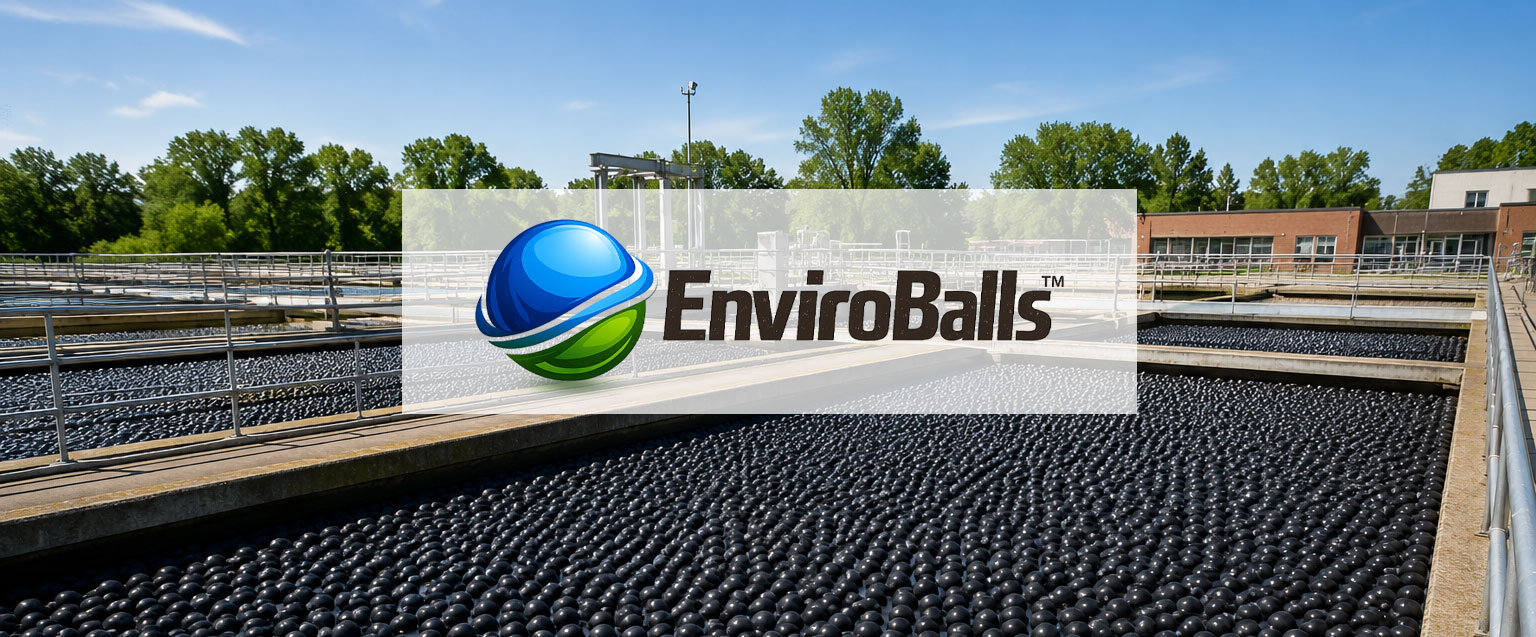
Floating shade balls for reservoirs are engineered HDPE water covers designed to reduce evaporation, help maintain water quality, reduce sunlight exposure that can contribute to algae growth, and protect reservoir infrastructure from UV-light exposure. These floating shade ball systems are used in drinking water reservoirs, industrial ponds, wastewater lagoons, and agricultural water storage.
As drought conditions and water scarcity intensify across the United States, municipalities, industrial operators, utilities, and agricultural facilities are increasingly turning to engineered floating cover systems. Among the most widely evaluated technologies are shade balls for reservoirs, also known as floating shade balls, reservoir balls, reservoir shade balls, modular floating covers, evaporation control systems, or floating HDPE ball covers.
Global Environmental Solutions (GES) offers EnviroBalls™, engineered floating cover systems designed for reservoirs, ponds, lagoons, industrial basins, and water storage infrastructure throughout North America.
What Are Floating Shade Balls and How Do They Protect Reservoirs?
Shade balls are hollow, UV-stabilized HDPE (high-density polyethylene) floating spheres that form a modular cover across the surface of stored water. Deployed at scale, they create a protective barrier that reduces sunlight penetration, minimizes evaporation, suppresses algae growth, deters wildlife, and reduces chemical consumption.
Unlike fixed membrane covers or rigid structures, modular floating ball systems conform naturally to fluctuating water levels and irregular basin shapes.
Common applications include:
- Potable water reservoirs
- Stormwater retention ponds
- Wastewater lagoons
- Mining and industrial process ponds
- Agricultural water storage
- Airport and wildlife management ponds
- Chemical and industrial basins
Why Reservoir Operators Choose Floating Shade Ball Systems
1. Evaporation Reduction
Reducing evaporative water loss is the leading reason facilities deploy shade balls for reservoirs. Open reservoirs lose substantial volume due to solar radiation, wind exposure, high ambient temperatures, and low humidity. Modular floating covers limit direct solar exposure and surface energy transfer, and even modest evaporation reductions translate into significant operational savings for facilities storing millions of gallons. Evaporation reduction can be a critical factor when considering reservoir shade balls or floating water covers.
2. Algae Suppression and Improved Water Quality
Sunlight drives algae growth in open water systems. By blocking UV and visible light, floating shade balls suppress photosynthetic activity in the water column, reducing algae formation, lowering chemical demand, improving water quality stability, and decreasing maintenance frequency. This benefit is critical for potable water reservoirs, industrial process water, stormwater systems, and agricultural irrigation storage.
3. Bromate Formation Mitigation
In ozone-based water treatment systems, sunlight exposure can contribute to bromate formation at the water surface. Floating shade ball covers help limit UV-driven reactions, which is one reason municipalities and utilities have deployed this technology in large reservoir applications.
4. Wildlife and Bird Deterrence
Open reservoirs attract birds and wildlife, introducing contaminants and creating operational challenges. Floating covers reduce available landing surface, discourage wildlife congregation, and improve sanitary conditions. Facilities near airports, where bird activity poses aviation safety risks, have found floating ball systems particularly effective for wildlife management.
5. Modular, Scalable Installation
Unlike permanent rigid cover systems, modular shade ball covers require minimal infrastructure modifications. EnviroBalls™ install quickly, scale to any basin size, adapt to irregular geometry, and accommodate fluctuating water levels, making them suitable for both temporary applications and long-term reservoir protection.
Why HDPE Is the Material of Choice for Shade Balls
Most engineered shade balls are manufactured from UV-stabilized HDPE for its chemical resistance, impact durability, UV performance, environmental stress crack resistance, and long service life. Black UV-stabilized HDPE is the standard specification because it provides maximum UV absorption and proven outdoor durability in demanding environments.
Key Specifications to Evaluate When Sourcing Shade Balls
UV Stabilization
UV exposure is the most critical durability factor for outdoor floating systems. Resin selection and carbon black loading significantly affect long-term performance. Request documented UV stabilization data from any supplier.
Material Quality
Evaluate virgin resin vs. recycled content, wall thickness consistency, impact resistance, and manufacturing quality controls.
Regulatory Compliance
Depending on the application, facilities should assess NSF/ANSI 61 compliance, FDA resin standards, drinking water compatibility, and Buy America or domestic manufacturing requirements.
EnviroBalls™ Reservoir Cover vs. Traditional Fixed Reservoir Covers
| Feature | EnviroBalls™ | Fixed Membrane Covers |
| Modular | Yes | Limited |
| Adapts to water levels | Yes | Often limited |
| Retrofit-friendly | Yes | Sometimes |
| Structural support required | Minimal | Higher |
| Expandable | Yes | Limited |
| Installation complexity | Moderate | Often high |
| Maintenance access | Flexible | Can be restricted |
The right solution depends on reservoir geometry, climate, water chemistry, regulatory requirements, budget, and operational goals.
Industries Using Reservoir Shade Balls
Floating shade ball systems are actively evaluated across municipal water utilities, wastewater treatment facilities, mining operations, agriculture and irrigation, power generation, industrial manufacturing, airports and aviation facilities, HOAs and golf courses, and stormwater management operators.
EnviroBalls™ by Global Environmental Solutions (GES)
EnviroBalls™ are engineered modular floating cover systems built for demanding reservoir and industrial applications. GES supports customers with layout calculations, surface coverage estimates, site-specific evaluations, and full engineering support for commercial and municipal projects.
Applications include:
- Water conservation and evaporation reduction
- Algae suppression
- Wildlife deterrence
- Industrial basin covers
- Acid mist suppression
- Stormwater management
Frequently Asked Questions About Shade Balls for Reservoirs
How many shade balls does a reservoir need?
Coverage requirements depend on basin surface area and the desired level of shading. GES provides site-specific layout calculations and coverage estimates based on your facility’s dimensions.
Are shade balls safe for drinking water reservoirs?
EnviroBalls™ are engineered to support drinking water compatibility requirements. Contact GES to discuss your specific regulatory needs.
Why Choose EnviroBalls™ Floating Water Covers?
EnviroBalls™ are designed for long-term outdoor performance, with Engineered UV-resistant HDPE construction. Offering a simple installation with no structural cover system, EnviroBalls™ are scalable for reservoirs of any size. Technical support backed by GES’s expertise in water conservation.
What are the Best Uses and Applications of Floating Shade Ball Systems? Drinking water reservoirs, Industrial process water ponds, Wastewater lagoons, Agricultural irrigation ponds, Agricultural water storage, livestock and ranch water storage, Mining water storage, Stormwater ponds, Fire water storage, fire protection water ponds, water storage, and drinking water storage all can benefit from floating shade ball systems.
The Future of Floating Reservoir Cover Systems
Water scarcity, drought management, infrastructure resilience, and environmental compliance demands are all growing. For facilities weighing evaporation control, water quality improvement, and long-term operational flexibility, floating shade balls are one of the most practical and cost-effective tools available today.
Contact Global Environmental Solutions (GES) to learn more about EnviroBalls™ floating reservoir cover systems.
GES supports municipalities, industrial operators, utilities, and infrastructure projects throughout the United States. Get started now.