Effective Dust Control Solutions for Dirt and Gravel Roads

Roadbase Stabilization

Road Dust, A Growing Problem on Dirt and Gravel Roads

Driving on unpaved roads can result in visible plumes of dust, not only making your car dirty but also contributing to air pollution. According to the US Forest Service, every vehicle that travels one mile on an unpaved road each day can generate one ton of dust annually. With over 1.35 million miles of unpaved roads in the U.S., about 35% of all roadways, dust control on dirt and gravel roads has become an important environmental and health issue.

For many roads, paving is not an option due to high costs, environmental concerns, or historical preservation. Fortunately, dust control solutions like DustLess® provide an effective, affordable alternative.

How Dust is Created on Dirt and Gravel Roads

While dirt and gravel may seem durable, the impact of vehicle traffic can break down the road surface, generating dust. Here’s how it happens:

  • Vehicle Traffic: Every time a vehicle drives over an unpaved road, the force from the tires compresses the road surface, breaking it apart into small particles.
  • Size of Dust Particles: These particles, often less than 75 microns in size (smaller than the diameter of a human hair), become airborne. The turbulent air created by the vehicle further propels these particles into the air.
  • Heavy Vehicles: Larger vehicles like trucks cause more wear and tear on the surface, generating greater volumes of fugitive dust.
  • Vehicle Speed: Vehicles moving at faster speeds will increase the amount of airborne road dust as compared to slower moving vehicles.

This dust not only reduces visibility and creates nuisance, but it can also negatively impact air quality and local ecosystems.

Why Dust Control for Dirt Roads Is Essential

Dirt and gravel road dust isn’t just an inconvenience, it’s a health concern. Here’s why dust control is essential:

  • Air Quality: Dust particles are small enough to be inhaled, leading to respiratory issues for people living nearby.
  • Environmental Impact: Dust can pollute local waterways and affect plant and animal life.
  • Maintenance Costs: Roads without dust control deteriorate faster, leading to increased maintenance costs.

Implementing dust control for unpaved roads is a proactive step to mitigate these issues, while improving road safety and comfort for travelers.

Proven Solution: DustLess® Dust Control for Dirt & Gravel Roads

For those seeking effective dust control solutions, DustLess® is a scientifically formulated product designed to eliminate dust on dirt and gravel roads. Here’s why DustLess® is a leading choice for road dust management:

  • Long-Lasting Effects: DustLess® prevents dust for up to one year per application, depending on traffic levels.
  • Non-Toxic and Non-Corrosive: Safe for the environment, vehicles, and road surfaces.
  • No Evaporation: Unlike other dust control solutions, DustLess® remains effective in all weather conditions and will not evaporate.
  • Cost-Effective: DustLess® offers long-term protection with minimal maintenance, saving money on frequent applications.

DustLess® has been trusted by communities, municipalities, and road maintenance contractors across the country to control dust on dirt and gravel roads, providing cleaner air and smoother roads for all.

Additional Dust Control Tips for Dirt and Gravel Roads
In addition to using products like DustLess®, here are some other strategies for controlling road dust:

  • Road Grading: Regular grading can help maintain road surfaces and reduce dust generation.
  • Proper Road Drainage: Ensuring proper water runoff can prevent road erosion, which contributes to dust creation.

Conclusion: Manage Dust on Your Dirt & Gravel Roads with DustLess®
For roads that are frequently traveled, dust control isn’t just a matter of convenience, it’s a necessity. DustLess® offers an environmentally-friendly, effective, and long-lasting solution for managing dust on dirt and gravel roads. By applying DustLess®, you can reduce the environmental impact, improve air quality, and lower maintenance costs for years to come.

10 Reasons To Choose Global Environmental Solutions for your Soil Stabilizing Project

1. Our products are environmentally safe – developed for the earth, with the earth in mind.


2. We’ve been working within the soil stabilization industry for 20 years now (originally started as DirtGlue Enterprises – which is still the forefront namesake of our line of terrain management products).


3. We listen. GES is not going to provide you with a cookie-cutter, out-of-the-box solution. We’re going to hear what your issue at hand is.


4. We believe in science (and use it as a tool). Following the “listening” portion above, we take the education you’ve granted us from your pain and customize the right product driven by scientific research and modernized technology utilization. The idea is to come up with an application that solves any variable that might exist and pose a challenge to the fruitful culmination and inherent solution of your project.


5. We like to play in the dirt. With experience, comes experience. And with that experience and understanding, we can make better informed decisions on how to manage the “dirt” we’re working with…


6. Consider our DirtGlue® line of products if you have a need in any of these areas:

  • Permanent dust control
  • Embankment stabilization
  • Sub-grade stabilization
  • “Green” paving using industrial polymer as a bonding agent
  • All soil stabilizing requirements
  • Erosion control
  • Stockpile capping
  • And really any terrain management/control
  • solution you may be on the hunt for…


7. We have sales and service locations worldwide, so, we’re global, and readily available for you whenever, and wherever you need it!


8. We are a veteran owned business.


9. Our goal and operative mission has been – since day one – to provide the best possible results in an industry where ‘good’ just isn’t good enough. We strive for technical and ecological superiority; every product, every project, all the time.


10. We solve problems related to soil management – and we enjoy it.

Searching for proven environmental solutions? See how GES tackles dust, erosion, and soil stabilization challenges with innovative, eco-friendly products used worldwide.

Road Base Stabilization and Drainage Management

Roads. They’re a part of our everyday lives. Getting us from Point A to Point B and everywhere in-between. That said, not all roads are created equal… Today, we’d like to talk about the proper construction of a roadway and how best to manage the stabilization and drainage properties of a road as an inherent piece of the initial puzzle…

Roads are directly affected by the base plot of land they’re built on. They’re also affected by direct environmental factors such as nearby runoff and drainage factors. Therefore, and it’s likely obvious, the way you construct and maintain the terrain that immediately abuts any piece of a road is imperative. You can’t just flatten the surface and pour the asphalt. Sure, that’s the very thought a lot of us have when we think about a road but, there’s far more to it – at least if you’re being smart about it… The soil should be made from aggregate of the proper gradation and it should be derived from crushed rock.

Road Building vs. Paving

Let’s start at the beginning. As mentioned, the main issue at hand is that most people simply look at the pavement and think “ROAD,” because that’s what shows. That’s “what’s on the surface.” With this attitude the end result is that they end up relying too much on – the pavement – without considering the other more important aspects that should go into any paving project. A road is not pavement. A road is a system of which the pavement is the top layer (much like the roof on a house is the top of a complete system of foundation, frame, walls, roof, etc. that make up the whole). See where we’re at with our thinking here?

In order to provide a pavement (which is what GES has created with our Polymer Pavement System), with good functionality along with a good lifespan, we need first to ensure a good base and good drainage, thus not relying on the pavement for strength but rather for consolidation of the surface aggregate such that there is no mud in the wet season and no dust in the dry season…

If the surface to be paved requires better load bearing, this can be accomplished using geosynthetics. The side benefit of the geosynthetics is better drainage as well. Have questions about geosynthetics? Call us. We have a warehouse full of answers.

When it comes to road building versus simply paving, it’s possible to have 2 – 3 inches of pavement (polymer, asphalt or concrete), which will support nearly any load if the base and subgrade are stable and well drained. It’s not feasible to rely on 4 inches or more to support any load if the base and or subgrade are poorly stabilized or poorly drained.

With Global Environmental Solutions, you’re taking a giant leap towards constructing roadways that are created with a correct, proactive approach the first time. We proved products that serve roads that are built to last.

And again, remember, a road is more than just a surface you drive on, and said strip of pavement is potentially compromised by any surrounding ecological variable. Look around. Is there a parcel of land running downward towards the roadway? If yes, that’s direct route for runoff and erosion to occur – eating away at your road and creating potentially disastrous driving conditions.

Products for consideration:

  • DirtGlue Polymer®
  • TerraDry®
  • DustLess®
  • DirtGlueDry®
  • PotHoleGlue™
  • DGE Polymer Pavement System™

Want stronger, longer-lasting roads? Explore our road base stabilization techniques to improve strength, compaction, and water management.

We’ll help you design, plan, and construct the best road you can build, at a cost you can appreciate. Not only are you saving upfront, but on the backend as well.

Observations from the Worksite: The Rise of DGCool™, the Industry’s First Cold Climate Polymer Solution

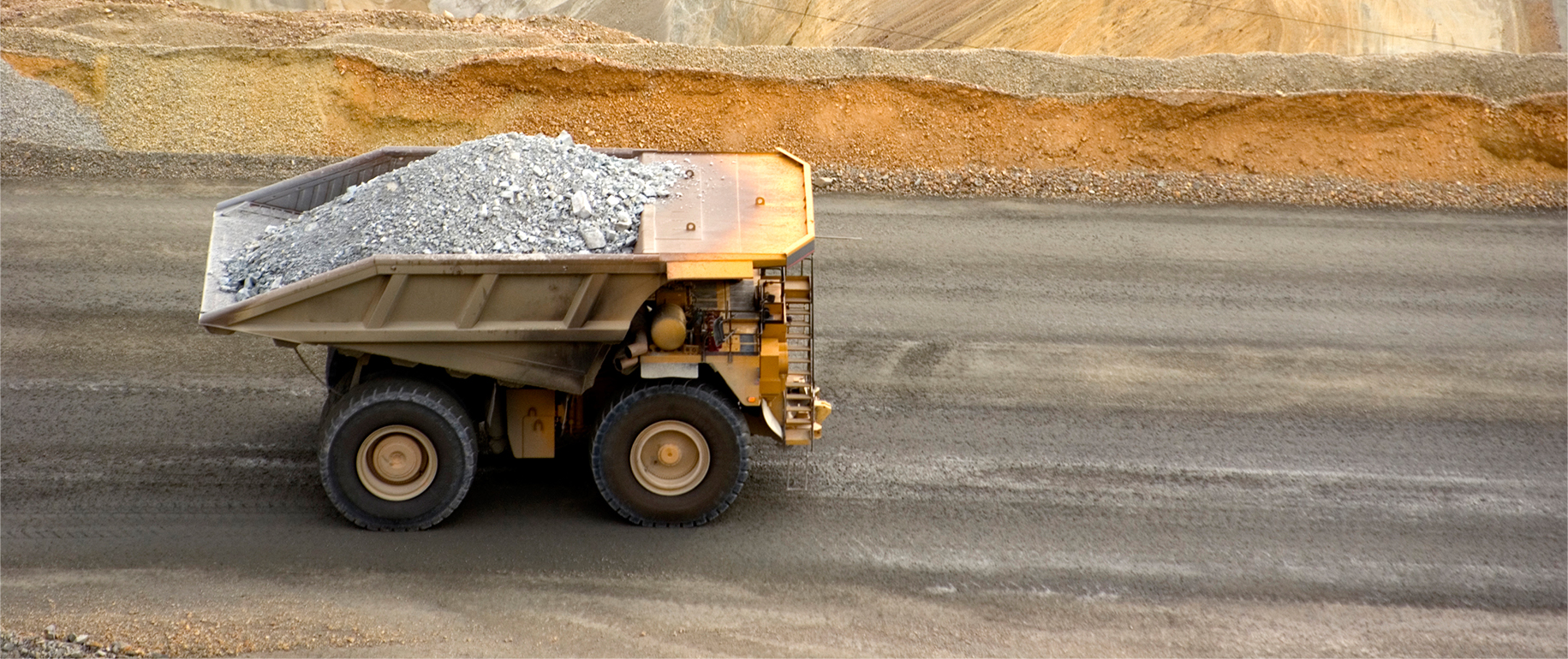
A large dump truck is moving through a quarry, carrying a load of dark materials. The scene is expertly managed with dust control measures. In the center of the image, there's a circular logo for "DG Cool" with the tagline "The Only Cold Climate Polymer.

Conversation with D&T Landscaping & Irrigation President Dave Olson

D&T Landscaping & Irrigation have been serving their community in Minnesota since 1980.  That’s 40 years of service with a continued value proposition to improve and foster top tiered solutions for all their customers’ unique needs.

One such customer/vertical they’ve long served exists in the mining industry. A reoccurring challenge D&T has been faced with is in utilizing a dust suppressant solution that keeps potential environmentally harmful fugitive dust particles onsite rather than floating around in the air. The challenge is further heightened by the fact that the different experiences Minnesota is faced with from naturally occurring seasonal shifts had compromised past remedial attempts. D&T utilized an assortment of polymer based products as a potential solution (as opposed to their typical mode of attack – hay) from several different companies over the years. Finally, three years ago they came in to contact with Global Environmental Solutions who have worked closely with D&T owner/president, Dave Olson, to create an exact solution to their working problem(s). This relationship led to GES developing their latest product offering, DGCool™.

Keep reading to learn more about the challenge, the approach, the solution, and the overall experience with GES and DGCool™:

How’d you learn about Global Environmental Solutions and their DirtGlue® line of products?

Dave Olson: Well, what we do is we provide dust suppression services for the steel and tackamine mines over here in Minnesota. We’ve historically used hay to suppress the dust permeating from the mines. The Challenge with that is these conditions. These tailings basins that we work in are wet. Getting a piece of equipment down there is extremely challenging so we started exploring using polymers as a potential way to hold the dust down until we could get other equipment out there to cover it up.

We tried probably six different products to accomplish this from five different companies and GES or DirtGlue® was the only company that was willing to reformulate their product to best serve our unique conditions. Up to that point we had no products, no polymer based products that were holding the dust down on our tailings basin.

DGCool™ came out of that effort to kind of redesign the product to hold in colder temperatures. When we’re transitioning from fall into winter and then again from winter to spring, we go through a frost / freeze process where the tailings freeze generally at night, warm up, moisture draws out and then we’re kind of okay for the day. But once it starts to freeze, it’s a really fine product, the moisture evaporates and any wind that picks up from below wipes it out. That’s an issue because in these mines, the dust is considered fugitive dust, which is not ideal. Obviously, our goal is to keep that dust in place.

How long have you been working with GES?

Olson: We had tried a bunch of polymers from a number of companies because by-and-large the marketing shtick is everyone claims to have the solution you/we need. When we solicited the help of GES three years ago we started by using two of their products, DirtGlue® and DustLess®. A lot of polymers act similarly, but there are certain elements to each that are proprietary, which is why we tried two different products and the products of other vendors. We wanted to see what would work best for our challenges.

Two years ago we tried a large 100-acre deployment of GES’s DirtGlue® product and it did not withstand the frost / freeze process. It would freeze and peel off and didn’t solve the problem. So I went back to Chris (Rider) and explained what was happening – what we were hoping for – and that’s when he started reformulating the recipe based off of tailings samples we sent at his request. This was the beginning of what would become their DGCool™ solution.

How did GES work with you to outfit you with the best possible solution for your unique challenge? What can you say about the working relationship between all involved?

Olson: What I like about Chris and GES is he’s continually taking a proactive approach and even still asks for tailings samples so the company can work to improve upon what we’ve put to action. They don’t simply rest on what they’ve delivered and move on – they stay actively engaged and strive to maintain advanced improvement.

They were the only company that came back and asked how it went. “How did it go? What were your application rates?” Of all the other companies, they’re the only one that called back. We’re not in this for a one-time sale, we’re looking to solve a problem, so that gets me enthused about the working relationship…

You worked with GES to help facilitate a working test example of the effectiveness of their new DGCool™ product. Tell us about the application. What can you say about the product? How did it help you accomplish what you were looking to achieve?

Olson: It held until we got snow, which is good. Once we get snow there is no dust problem until spring (for obvious reasons). So we’ll know exactly what we’re dealing with when the snow melts and water starts to runoff as it does in spring. If the product is still there, we’ve done it.

We have the product at two sites, a 100-acre site and a 5-acre one. They both held until we got the snow on the ground, which is encouraging. It’s definitely much better than what it was. Prior to this year we tried a different deployment method which was application via helicopter. The first year we used a bucket with large spray nozzles. The helicopter company came up with a different solution – it wasn’t a spray nozzle but more of a rotating spin, gravity feed out, which was a much better solution. So the combination of the product and the delivery method is how we’ve gotten to where we are this year.

Would you recommend GES and their products to people in your industry?

Olson: Yes and no (laughs). Yes because they offer exemplary service and work with the customer to tweak their product to match exactly what the customer needs. This can’t be understated. I jokingly say “no” because in our case I feel like we’re on the cusp of a pretty proprietary solution and application set that separates what we’re doing in the market. But I think as far as what we know as of right now, absolutely I would. GES has been a real pleasure to work with, and the relationship continues to develop as we both look to improve upon what we’ve accomplished thus far, which is exciting for all parties involved.

Between Rose and Chris I can’t say enough good things about the GES team. I’ve felt like from the start they’ve been engaged with me to help me solve a problem. Since the inception we’ve been working closely to help solve the challenge at hand and we’ve collectively kept peeling the onion. For instance, when we started we had a problem with our pump system at the application stage. Come to find out, the polymer heats up to a pretty high temperature and the seals of the deployment pump would fail. I called Chris to ask him what he thought was happening and he was like, ‘if you’re not immediately trying to pump that through the pump prior to it heating up, yeah, it’s going to wreck the seals.’ So we solved the problem by finding a high-temperature chemical seal, which he was engaged with at the outset. I can’t even begin to tell you how many emails he sent me with resources full of information to look into when it came to finding an appropriate seal.

As we’ve gone through evaluating the product, they’ve been there. They want to help us find the perfect solution. I have no doubt that if we come out of spring and the product has deteriorated or is non-existent, Chris is going to be right there and spend more time trying to figure out where we go to move forward and solve it. That’s the kind of guy he is…

###

Need reliable soil stabilization through winter? Discover why DGCool® is designed for cold-weather applications that keep your project on track.

GES: For the Earth, with the Earth in Mind.

Gas and Oil Exploration

Gas and Oil Exploration

An industry that never rests in this great country of ours is the oil and gas exploration industry – which, in short, is the unearthing of fossil fuels which generate the energy needed to fuel myriad applications in everyone’s daily routines.

That said, there’s a lot of moving pieces and parts when it comes to this type of “exploration” and the ensuing extraction of these resources. Many such oil and gas exploration sites are abundant in challenging terrain and environmental variables that could pose distraction and ecosystem maladies if not tackled appropriately. That’s where Global Environmental Solutions comes in. Our suite of products has been confidently utilized for decades, offering the appropriate solutions needed to make sure the potential environmental issues created by the work being done onsite at oil and gas exploration facilities stays onsite.

Environmental issues to consider and act upon that come in to play when we start looking at oil and gas exportation sites:

  • Air quality
  • Land sustainably
  • Fresh water
  • Soil being disturbed at sites
  • Use of toxic chemicals
  • Hazardous wastes
  • Solid wastes and sewage
  • Radioactive wastes
  • Dust and/or sediment from stockpiles at sites
  • Dust from traffic at sites or access roads

There are numerous ways that any of the above can be compromised due to the nature of the work being done:

  • Surveying
  • Blasting
  • Drilling
  • Extraction
  • Associated incoming and outgoing site traffic

So how do we proactively combat these situations and make certain that the sites of oil and gas exploration remain safe for human and environmental life?

Let’s dive into some of the varied uses companies contract GES products for.

Oil & Gas Exploration companies have utilized us for::

To round it up, the Oil and Gas Exploration industry, is subject to myriad that adversely affect the environment if not treated appropriately and proactively combatted correctly. We at GES have been involved in many customized site treatment solutions over the years. If you need help or have questions, we have the answers and the products to keep your worksite safe, your workers safe, and the surrounding ecosystem safe – from the terrain, air, and water (seen and unseen).

 Learn how our products reduce dust, control erosion, and support heavy equipment in the toughest exploration environments.

GES: For the earth with the earth in mind.