

Reducing Operating Costs Through Long-Term Dust Suppression
Global Environmental Solutions | White Paper
Executive Summary
Dust control is essential for maintaining safe, efficient, and environmentally responsible industrial operations. Facilities routinely invest significant resources controlling dust generated from unpaved roads, haul roads, aggregate yards, mining operations, construction sites, and industrial material handling areas.
Water trucks remain the most widely used dust control solution for unpaved roads, haul roads, aggregate yards, construction sites, and industrial facilities because they are familiar and readily available. While water has a low initial material cost, it requires continual reapplication, resulting in significant labor, fuel, equipment, and water consumption costs throughout the year.
Long-term dust suppressants provide a fundamentally different approach by reducing maintenance frequency while delivering consistent dust control over extended periods. Rather than temporarily wetting the surface, they reduce the frequency of maintenance while delivering consistent dust control over extended periods. When evaluated using total cost of ownership rather than initial purchase price, long-term dust suppression frequently provides substantial operational savings.
This paper examines the hidden costs of conventional watering, introduces the concept of lifecycle cost analysis, and provides guidance for selecting the appropriate Global Environmental Solutions dust control technology for specific applications.
The Impacts of Uncontrolled Dust
Dust is far more than an inconvenience. Across mining operations, aggregate facilities, industrial plants, construction projects, ports, and transportation infrastructure, excessive dust directly affects productivity, equipment performance, safety, and environmental compliance. Facilities experiencing uncontrolled dust commonly encounter:
- Reduced operator visibility
- Increased roadway maintenance
- Accelerated equipment wear
- Employee health concerns
- Community complaints
- Environmental compliance challenges
- Increased water consumption
Because these impacts occur every day, dust control should be viewed as an operational investment rather than simply a maintenance expense.
The Hidden Cost of Water Trucks
Water is often perceived as the least expensive dust control option because of its relatively low material cost. However, the true cost of dust suppression extends far beyond the price of water itself.
Water typically provides effective dust suppression for only a few hours before evaporation allows dust to return. During hot, dry, or windy conditions, multiple watering cycles may be required throughout the day, with some operations relying on nearly continuous water truck operation.
These repeated applications generate significant operating costs, including:
- Equipment ownership and depreciation
- Fuel consumption
- Labor and equipment operators
- Water acquisition and transportation
- Pumping and application time
- Equipment maintenance
- Traffic interruptions during watering
- Mud formation immediately after application
- Inconsistent dust suppression between watering cycles
When these costs are evaluated over weeks or months, water trucks frequently become one of the most expensive dust control methods available.
Long-Term Dust Suppression
Global Environmental Solutions suite of dust control products were developed to control dust by stabilizing the surface rather than simply adding moisture. Following application, long-term dust suppressants penetrate the roadway or aggregate surface. In the case of DirtGlue® products, the suppressants bind fine particles together into a durable matrix. This stabilized surface resists traffic-induced dust generation while maintaining natural drainage characteristics. In the case of DustLess® products, the dust suppressant adds weight to fine particles, inhibiting their ability to become airborne.
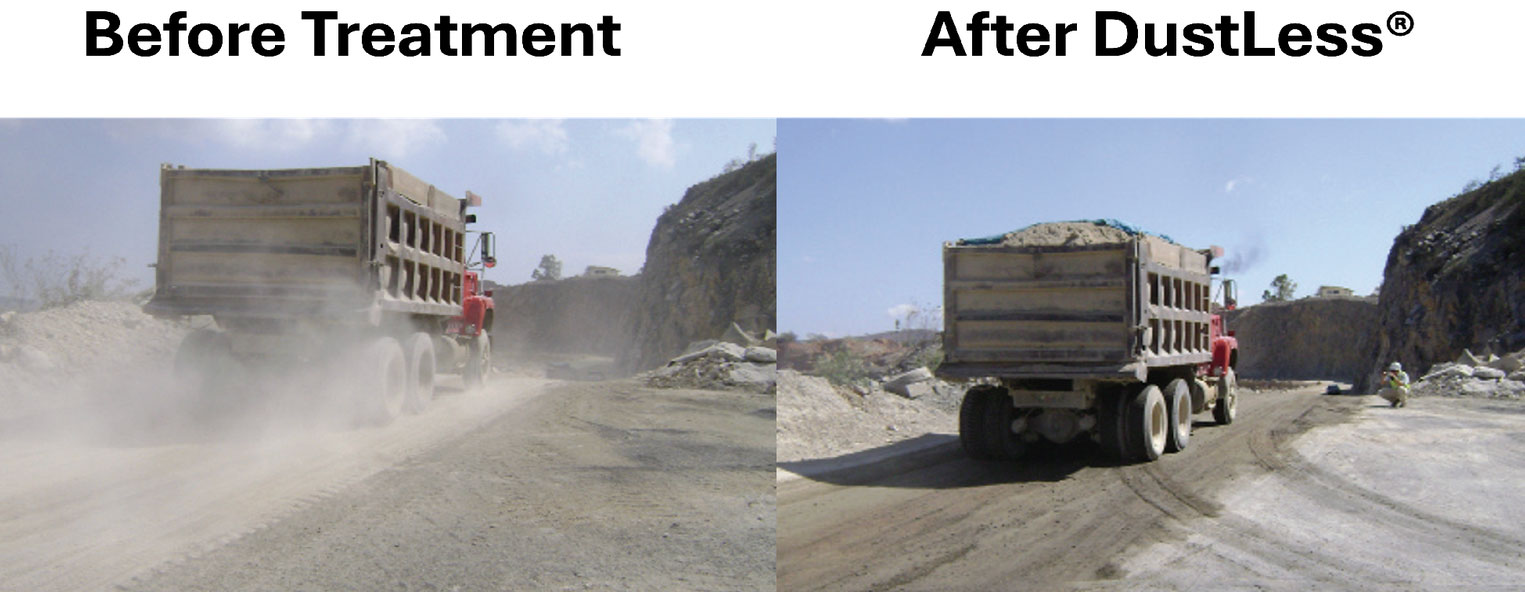 Figure 1. Before Treatment and after DustLess® Treatment at Industrial Facility.
Unlike water, DustLess® and DirtGlue® continues working long after application, providing extended dust suppression that is measured in months rather than hours.
Typical applications include:
- Mine haul roads
- Industrial facilities
- Aggregate operations
- Quarries
- Construction sites
- Dirt and gravel roads
- Material storage yards
- Heavy equipment travel lanes
In heavily trafficked surfaces, by dramatically reducing the frequency of reapplication, DustLess® lowers overall operating costs while improving roadway performance.
Dust Control Performance Over Time
The longevity of DustLess® depends on several site-specific variables, including:
- Aggregate type
- Soil gradation
- Traffic volume
- Vehicle weight
- Climate
- Application rate
- Surface maintenance practices
Immediately following application, DustLess® commonly achieves dust control efficiencies approaching 90–95%, depending on site conditions and application rate.
As traffic gradually abrades the treated surface, dust control efficiency slowly declines. Rather than experiencing the rapid loss of performance associated with water, DustLess® provides a gradual reduction in effectiveness over several months.
Under extremely demanding mining applications involving 100-ton haul trucks, reapplication may be required approximately every three months.
Under typical rural dirt and gravel road conditions, many users require reapplication only once every twelve months or longer.
Facilities generally choose to reapply DustLess® when visible dust begins to reappear, allowing maintenance activities to be planned proactively rather than reactively.
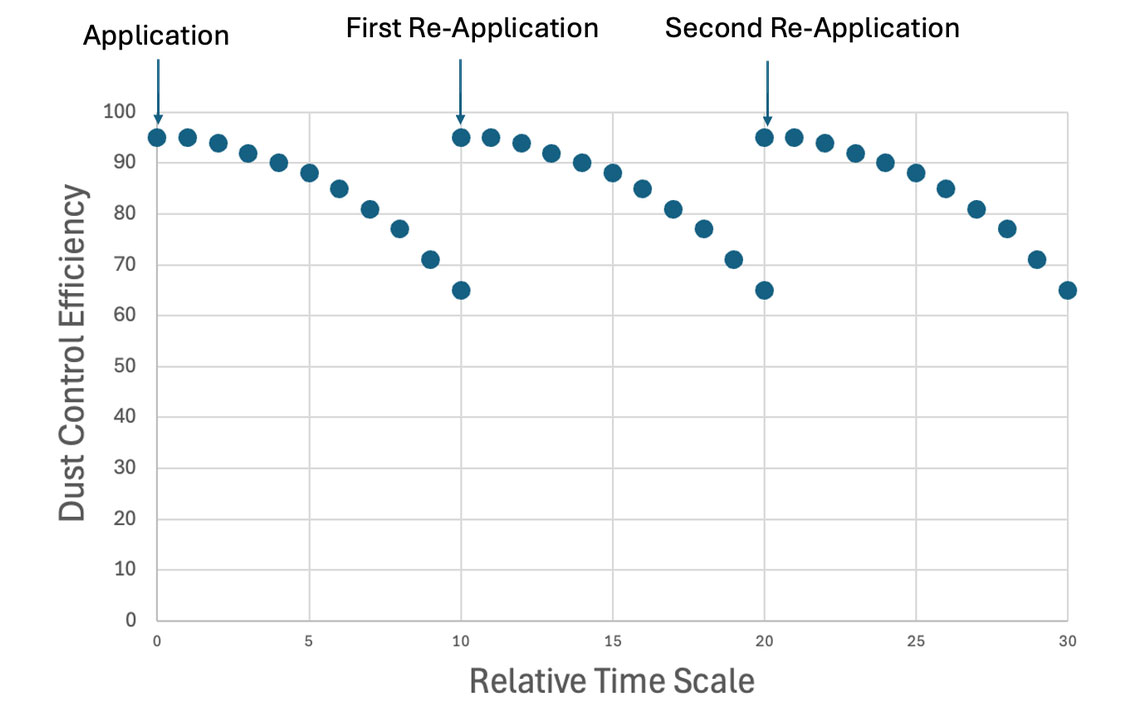
Figure 2. Relative Dust Control Efficiency versus Time
Table 1. DustLess® Performance based on Use Case
| Application Rate | Typical Service Life |
| Heavy Duty Mine Roads | 2–6 months |
| Heavy Industrial Facilities | 3–9 months |
| Agricultural Facilities | 4–12 months |
| Moderate Passenger Vehicle | 6–12+ months |
| Light Passenger Vehicles/ Rural Gravel Roads | 10–12+ months |
Residual Benefit of Repeated Applications
Field observations collected over more than twenty years indicate that DustLess® exhibits a cumulative benefit following repeated applications.
Once an aggregate surface has been treated multiple times, the roadway often requires lower application rates while maintaining longer performance intervals. Successive applications continue strengthening the treated surface, improving long-term dust suppression and reducing maintenance costs.
This cumulative benefit is reduced when large quantities of new, untreated aggregate are introduced, as fresh material has not previously received DustLess® treatment.
Comparing Total Cost of Ownership
Although long-term dust suppressants require a greater initial investment than water alone, lifecycle economics strongly favor stabilized dust control systems.
Facilities implementing DustLess® commonly experience:
- Reduced annual dust control costs
- Lower labor requirements
- Reduced fuel consumption
- Less equipment wear
- Lower water usage
- Improved roadway durability
- Better visibility and safer operating conditions
- Reduced environmental complaints
- More predictable maintenance schedules
Rather than repeatedly paying for temporary dust suppression, facilities invest in a treatment that continues providing value over an extended period.
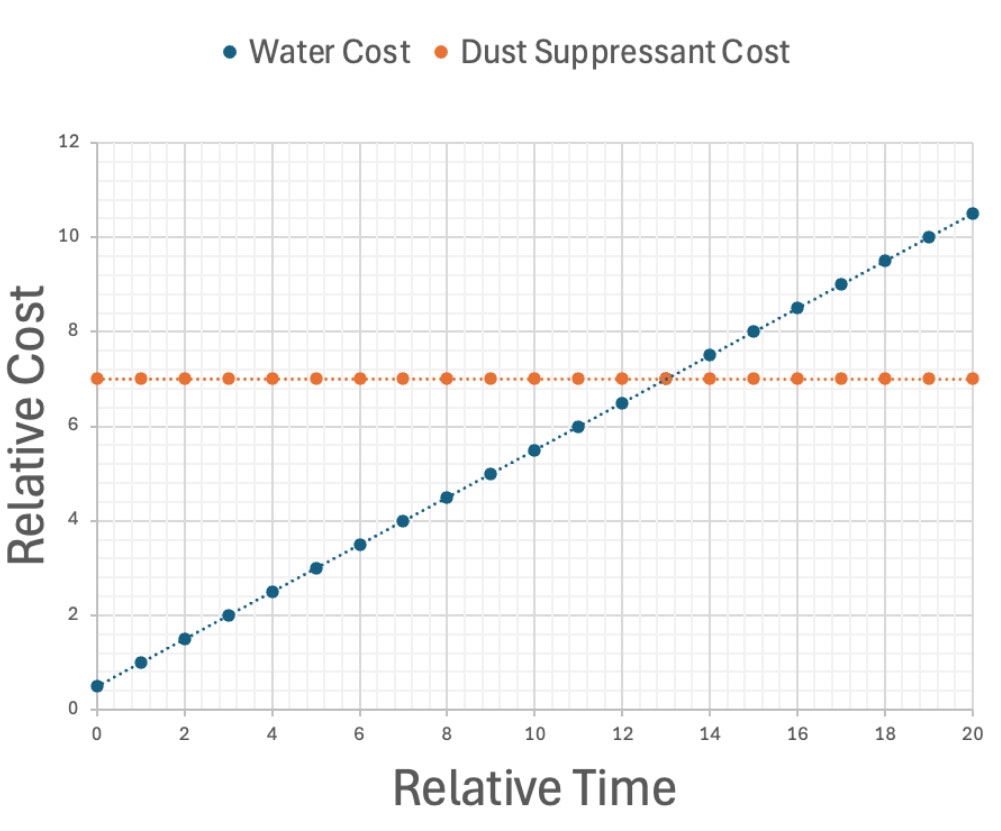
Figure 3. Example Annual Dust Control Cost Comparison*
*In multiple case studies, long-term dust suppressants routinely save operators 20-50% in dust control costs, when utilizing a total cost analysis.
Table 2. GES Dust Control Product Selection Guide
| Product | Primary Purpose | Best Applications | Typical Performance | Relative Cost |
| DustLess® | Long-term dust suppression | Haul & mine roads, industrial yards, gravel roads, construction sites, aggregate facilities | Dust control for months to a year without reapplication | ++ |
| DirtGlue® | Soil stabilization and erosion control | Slopes, embankments, stockpiles, unpaved areas, construction sites, erosion-prone soils | Long-term soil stabilization with excellent erosion resistance, prevents wind-blown dust from non-trafficked areas | ++ |
| DirtGlue® Balance | Dust Control with Roadway Stabilization | Gravel roads, shoulders, parking areas, trails, equipment yards, aggregate surfaces requiring improved stability | Reduces dust while increasing surface strength and resistance to rutting | + |
The Value of Total Cost of Ownership
Successful dust control is measured by more than the purchase price of the treatment.
The most economical solution is often the one that minimizes labor, equipment operation, maintenance, water use, and operational interruptions while consistently controlling dust.
Evaluating dust suppression through the lens of total cost of ownership enables facilities to make informed decisions that improve productivity, reduce maintenance costs, and support long-term environmental stewardship.
Return on Investment
Facilities implementing long-term dust suppression commonly report:
- Lower annual dust control costs
- Reduced labor requirements
- Reduced fuel consumption
- Lower equipment operating hours
- Less roadway maintenance
- Improved visibility and safety
- Significant water conservation
- Fewer environmental complaints
- More predictable maintenance scheduling
Because application frequency is dramatically reduced, many facilities recover the initial investment through reduced operating costs over the life of the treatment.
Table 3. Six-month comparison between Water and DustLess®.
| Six-Month Comparison | Water | DustLess® |
| Typical Applications | 360 | 1 |
| Labor Requirements | Very High | Low |
| Fuel Consumption | Very High | Low |
| Water Usage | Very High | Low |
| Equipment Operating Hours | Very High | Low |
| Dust Control Performance | Variable | Consistent |
| Visibility Conditions | Variable | Improved |
| Maintenance Requirements | Daily | Planned |
| Typical Service Duration | Hours | Months |
| Annual Operating Costs | High | Lower Total Cost |
| Roadway Performance | Variable | Reduced Maintenance |
Conclusion
Every industrial facility has unique operating conditions, traffic volumes, aggregate characteristics, and environmental objectives. Selecting the proper dust control strategy requires balancing initial investment with long-term operating costs.
While water trucks continue to play a role in temporary or emergency dust suppression, facilities seeking to reduce annual operating expenses increasingly recognize the value of long-term dust suppression technologies. By reducing application frequency, conserving water, minimizing equipment operation, and improving roadway performance, DustLess®, DustLessBio™, DirtGlue®, and DirtGlue® Balance provide practical solutions that lower the total cost of dust control while supporting safer, more efficient operations.
By focusing on total cost of ownership rather than initial material cost, facility owners can implement dust control strategies that improve compliance and safety, reduce maintenance, conserve water, and lower operating costs for years to come. Ultimately, the most economical dust control strategy is the one that minimizes total operating costs while consistently meeting operational, environmental, and safety objectives.
Learn More
This paper focuses on the economics of dust control and lifecycle cost evaluation.
For additional information regarding dust generation, application rates, dust suppressant performance, and the engineering principles behind DustLess®, please contact us at customerservice@dirtglue.com to request the companion white paper:
DustLess® Technical Guidance for Fugitive Dust Control (2026).